
Diheteropogon grandiflorus
Diheteropogon grandiflorus
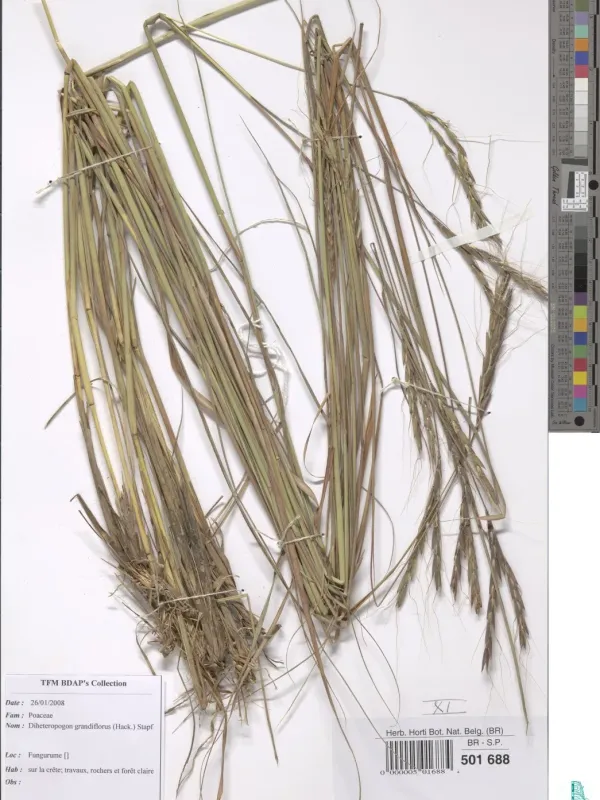
Description
Growing requirements
Diheteropogon grandiflorus is a robust perennial grass species belonging to the Poaceae family. Native to the African savanna, this plant is well-adapted to tropical climates with distinct wet and dry seasons.
The species thrives in well-drained soils, often dominating areas with sandy or loamy textures. It shows remarkable resilience to drought, maintaining its physiological functions even when water availability is low.
Full sun exposure is crucial for the optimal growth and development of this grass. In shaded conditions, its productivity significantly decreases, making it unsuitable for forested or dense canopy environments.
Its botanical structure features deep, efficient root systems that anchor the plant and allow it to access subsoil moisture. This feature makes it highly adapted to poor soil conditions.
Successful management of this crop requires an understanding of its ecological niche. Overgrazing can be detrimental; therefore, rotational grazing is recommended to ensure the longevity of the stand.
Yield
The primary agricultural use of Diheteropogon grandiflorus is as forage for livestock. It serves as a staple source of biomass in various pastoral systems across sub-Saharan Africa.
Yield capacity is largely determined by seasonal rainfall patterns. Under favorable conditions, the grass produces dense foliage that provides significant fodder for cattle and other herbivores.
Nutritional analyses suggest that while the protein content varies throughout the season, it remains an essential component for livestock maintenance in semi-arid zones.
The grass is highly valued for its ability to regenerate quickly after grazing. This regrowth capability ensures a sustainable supply of fodder during the peak growing season.
Strategic harvesting or grazing periods are essential to maximize yield. By timing the utilization correctly, farmers can ensure that the biomass produced supports livestock requirements efficiently.