
Diheteropogon amplectens
Diheteropogon amplectens
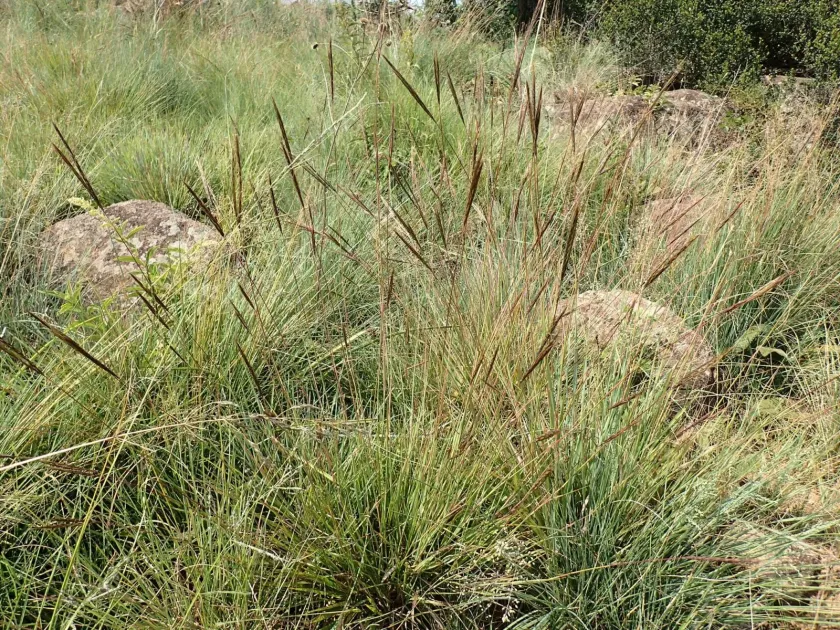
Description
Sowing dates
Diheteropogon amplectens is primarily propagated through seeds that germinate effectively at the start of the rainy season in tropical regions.
When establishing new stands, seeds should be sown in a well-prepared seedbed, cleared of aggressive competitive weeds to ensure proper establishment.
The sowing depth must be minimal, as the seeds are small and require sufficient sunlight to initiate the physiological processes of germination.
Maintaining adequate soil moisture during the first few weeks after sowing is critical for the survival of young seedlings in their early growth stage.
In managed grazing systems, broadcasting or row-seeding can be used depending on the equipment availability and the size of the pasture area.
Growing requirements
This species belongs to the Poaceae family and is widely distributed across the grasslands and savannahs of sub-Saharan Africa.
It thrives in well-drained soils, showing a preference for sandy or rocky substrates where competition from other heavy-feeding grasses is reduced.
The plant exhibits high tolerance to environmental stressors, including moderate drought conditions that occur during the dry season cycles.
Full sun exposure is an essential requirement for healthy development, as the species does not perform well in shaded or semi-shaded environments.
Temperatures ranging from 20 to 30 degrees Celsius are ideal for sustaining vigorous vegetative growth throughout the active growing period.
Yield
The economic value of this crop lies in its role as a persistent forage resource for livestock grazing in extensive pasture systems.
While productivity is highly dependent on rainfall, it remains a reliable source of biomass compared to many other indigenous grass species.
- High protein content during the early vegetative phase.
- Significant resistance to grazing pressure and livestock trampling.
- Good biomass regeneration capacity after seasonal cutting.
The forage quality declines as the plant reaches maturity and the stems become lignified, which is a natural transition for many tropical grasses.
Proper grazing rotation is essential to maintain the productivity and longevity of the stand over several years of agricultural utilization.
Main diseases and pests
Fungal infections of the foliage can be a major threat during extended periods of high humidity and excessive rainfall within the growing zone.
Insects such as grasshoppers and various soil-dwelling larvae can periodically impact stand density if population outbreaks occur.
Overgrazing poses the most significant threat to the survival of the species, as it depletes root reserves and weakens the plants' recovery mechanism.
Encroachment by woody shrubs can shade out the grass, leading to a loss of pasture productivity if not managed through prescribed fire or mechanical clearing.
Root system damage due to waterlogging in low-lying areas is a frequent cause of stand failure during the peak of the monsoon season.
Harvesting
Forage harvesting for hay should be timed precisely before the flowering stage to ensure the highest nutritional value is captured in the bales.
Cutting at the correct height is important to protect the basal buds, which are responsible for the subsequent re-growth of the forage stand.
Seed collection is performed when the seed heads show signs of maturity, typically indicated by a change in color to a brownish hue.
Drying the harvested material requires careful management to prevent spoilage from moisture, especially in regions with unpredictable rainfall patterns.
Storage in well-ventilated areas or under shelters is highly recommended to maintain the quality of the fodder for off-season utilization.