
Hoary aster
Dieteria canescens
Description
Sowing dates
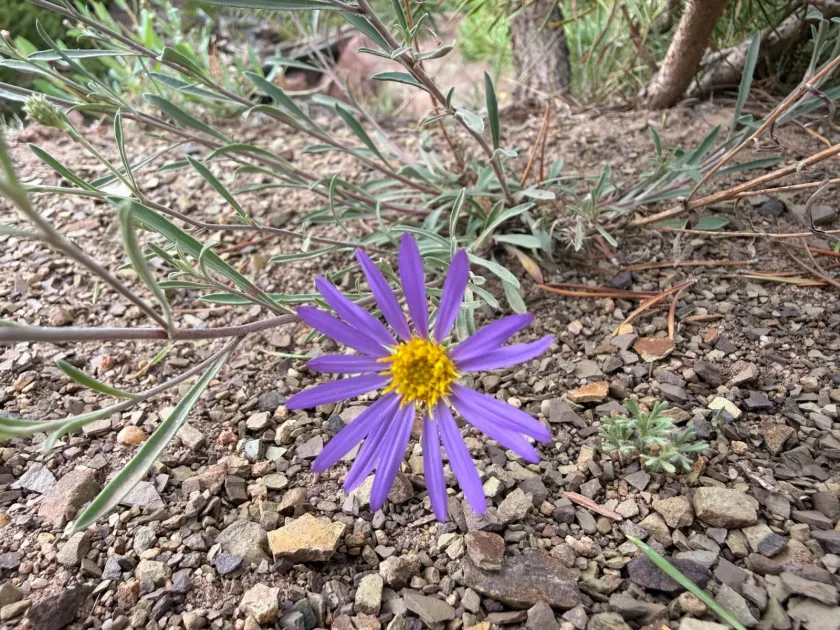
Dieteria canescens, commonly known as hoary aster, is an herbaceous perennial in the Asteraceae family that thrives in arid and semi-arid environments.
Propagation is primarily performed through seeds, which should be sown in the autumn or early spring to allow for natural cold-moist stratification necessary for germination.
The seeds should be covered only lightly with soil, as they require a certain amount of light to trigger the physiological processes of sprouting.
When starting indoors, it is recommended to use a sterile, well-draining seed-starting mix to prevent damping-off, a common issue with many Asteraceae species.
Once seedlings have developed their first true leaves, they can be hardened off and transplanted to their permanent outdoor location with ample spacing.
Growing requirements
This species is well-adapted to poor, rocky, or sandy soils, which are typical for its native habitat in the western United States and Canada.
Hoary aster requires full sun exposure to maintain its compact growth form and to ensure abundant flowering throughout the summer and autumn months.
The plant is highly drought-tolerant once established, and it is crucial to avoid over-irrigation as it is extremely susceptible to root rot in saturated conditions.
In terms of temperature, Dieteria canescens is robust, demonstrating significant tolerance to both extreme heat and cold, provided that soil drainage is adequate.
Fertilizer application should be minimal or unnecessary; this plant is evolved to extract nutrients from lean soils and high-nutrient conditions may cause excessive, floppy growth.
Yield
As a non-traditional crop, hoary aster does not have standardized yield metrics, but its value is measured by its utility in ecological restoration and xeric landscaping.
The plant serves as a vital resource for pollinators, particularly native bee species and butterflies, contributing to the biodiversity of local ecosystems.
For seed production purposes, plants should be monitored until the heads turn brown and begin to dry out, indicating the seeds are mature and ready for harvest.
Its ability to stabilize soil makes it a candidate for erosion control on slopes where other, more demanding plants would fail to survive without heavy irrigation.
Host plant capacity is another significant aspect of its yield, as it provides shelter and food for various larvae, supporting the insect life cycle in the field.
Main diseases and pests
The primary threats to Dieteria canescens involve fungal pathogens, such as powdery mildew, which can appear during periods of high humidity and stagnant air.
Aphids are the most frequent insect pests, often congregating on the succulent new growth and flower buds, potentially vectoring plant viruses in the process.
Root system compromise due to overly dense or water-logged soil remains the most significant threat to the plant's long-term survival in garden settings.
Cultural practices like maintaining adequate plant spacing and ensuring the site is open to breezes can significantly reduce the risk of foliage-related diseases.
Integrated pest management strategies are preferred, focusing on manual removal of infested parts or the use of mild botanical oils before resorting to chemical controls.