
Dieffenbachia olbia
Dieffenbachia olbia
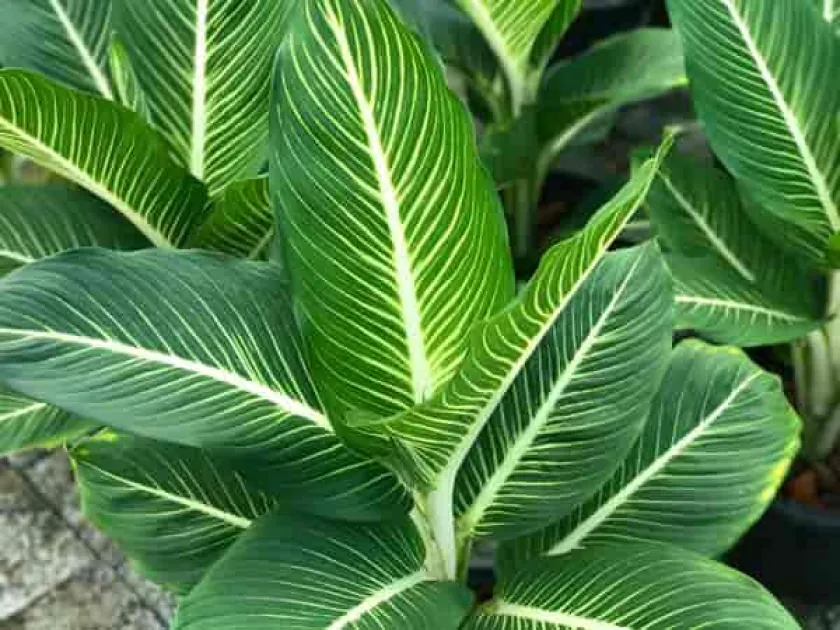
Description
Growing requirements
Dieffenbachia olbia is a decorative plant belonging to the Araceae family. Originating from the tropical rainforests of South America, it thrives in warm, humid environments with nutrient-rich, well-drained soils.
The plant requires a stable temperature range between 20°C and 25°C. It is highly sensitive to cold drafts and sudden temperature fluctuations, which can cause significant physiological stress and defoliation.
The ideal growing medium must be loose and moisture-retentive. A mix consisting of peat, bark, and perlite with a slightly acidic to neutral pH (5.5–6.5) provides the best results for root development.
Bright, indirect light is essential for the healthy development of this species. Direct sunlight may scorch the foliage, while insufficient lighting can lead to leggy growth and loss of the characteristic leaf pattern.
Maintaining high relative humidity (above 60%) is crucial for the plant's health. In indoor settings, regular misting or the use of humidifiers helps to prevent leaf tip necrosis and general dehydration.
Main diseases and pests
Spider mites, mealybugs, and scale insects are the primary pests affecting Dieffenbachia olbia. Early detection and treatment with systemic insecticides or horticultural oils are necessary to protect the plant's foliage.
Root rot is the most common pathology, typically triggered by overwatering or poor drainage. To prevent this, the soil surface should be allowed to dry slightly between watering sessions.
Leaf spot diseases, often caused by fungi or bacteria, can be mitigated by ensuring proper air circulation and avoiding overhead watering, which keeps the leaf surface dry.
Viral infections manifest as mosaics or leaf deformities. Since there is no effective treatment for viral diseases in ornamental plants, infected specimens must be removed and discarded to stop the spread.
Proactive care involves annual repotting, using fresh, pathogen-free soil, and providing adequate space for the root system to grow without compaction.