
Spotted dumb cane
Dieffenbachia maculata
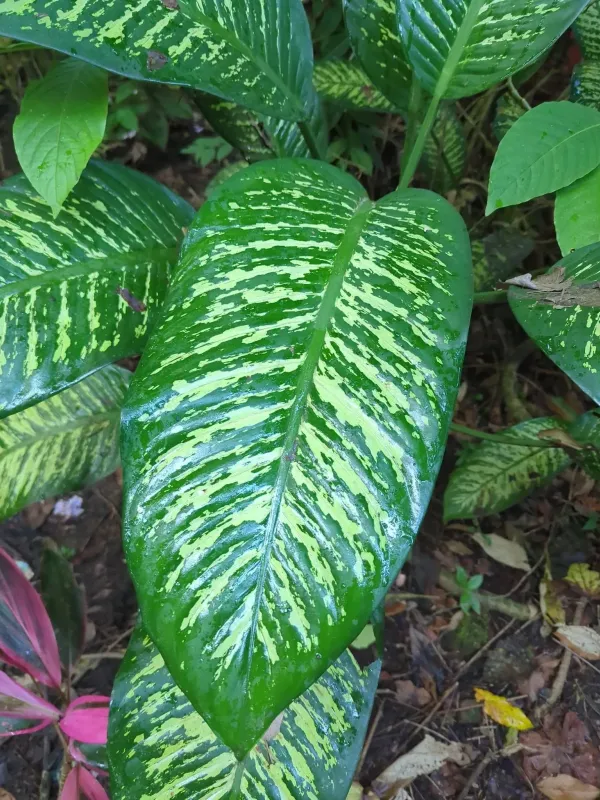
Description
Growing requirements
Dieffenbachia maculata, commonly known as spotted dumb cane, is a tropical perennial plant belonging to the Araceae family. Originating from the rainforests of Central and South America, it has gained global popularity as an ornamental agricultural crop due to its striking foliage.
The plant thrives in warm and humid climates, requiring constant temperatures between 20 °C and 28 °C. It is highly sensitive to cold drafts and sudden drops in temperature, which can lead to significant physiological stress and the development of necrotic lesions on the leaves.
Agronomic requirements for soil include a well-draining, nutrient-rich potting medium. A mixture of peat moss, perlite, and pine bark is recommended to ensure proper aeration and moisture retention, mimicking the natural forest floor conditions of its native habitat.
Light management is crucial for color expression in the foliage. While it prefers bright, filtered light, excessive intensity can bleach the leaves. Insufficient light, conversely, leads to etiolation, resulting in weak, elongated stems that require structural support.
Regular fertilization with a balanced, water-soluble fertilizer is essential during the active growing season. Applying nutrients every four to six weeks supports the plant's rapid growth cycle and maintains the vibrancy of its characteristic variegated leaf patterns.
Main diseases and pests
Fungal pathogens such as Erwinia bacterial blight pose a significant threat to Dieffenbachia plantations. These infections manifest as watery, foul-smelling spots on the leaves and stems, often spreading rapidly under conditions of high humidity and poor circulation.
Pest management focuses primarily on controlling sucking insects, such as spider mites and mealybugs. These pests exploit the plant's high water content, leading to stunted development and the transmission of secondary viral infections.
Root rot, driven by Phytophthora or Pythium species, remains the most common production issue. It occurs when irrigation protocols are not aligned with soil moisture sensors or drainage efficiency, leading to an anaerobic root zone environment.
It is important to emphasize the toxicity of the plant's sap, which contains calcium oxalate crystals. These crystalline structures cause intense irritation upon contact with skin or ingestion, necessitating rigorous safety protocols for all farm and greenhouse workers.
Integrated pest management (IPM) strategies, including biological control agents and localized fungicide applications, are recommended to minimize chemical reliance. Regular sanitization of pruning tools is also mandatory to prevent the transmission of pathogens between plants.