
Didymoplexis pallens
Didymoplexis pallens
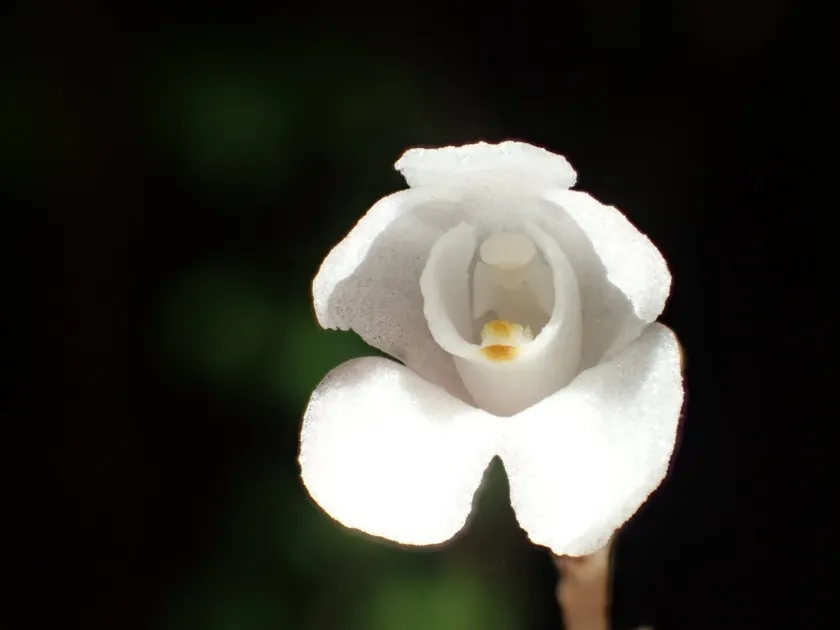
Description
Growing requirements
Didymoplexis pallens is a fascinating member of the Orchidaceae family. It is a myco-heterotrophic plant, meaning it lacks chlorophyll and derives its entire nutritional intake through a symbiotic relationship with soil fungi.
The plant originates from tropical regions across Asia, Africa, and parts of the Pacific. It thrives in dense, shaded forests where organic leaf litter provides a suitable substrate for its fungal partners.
Specific environmental conditions are essential for its growth, including high humidity levels and consistent, moderate tropical temperatures throughout the year.
Botanically, it spends most of its life cycle underground as a tuberous rhizome, surfacing only to produce flowers when conditions for cross-pollination are optimal.
Due to its total dependence on specific mycorrhizal fungi, this plant is not considered an agricultural crop and cannot be cultivated using standard agronomic practices.
Main diseases and pests
The primary threat to Didymoplexis pallens is the ongoing destruction and fragmentation of primary tropical forest habitats due to deforestation and land conversion.
Any disruption to the delicate soil microbiome, such as the introduction of pesticides or fertilizers in adjacent areas, can disrupt the plant-fungi symbiosis, leading to death.
As a highly specialized species, it has a very low tolerance for environmental changes, such as shifts in local rainfall patterns or prolonged droughts that affect fungal activity.
Small populations can be decimated by natural soil-borne pathogens or opportunistic insects that damage the tuberous roots during the subterranean phase of development.
Conservation efforts are critical to protecting this species, as it serves as an indicator of the health and integrity of forest soil ecosystems.