
Didierea trollii
Didierea trollii
Description
Growing requirements
Didierea trollii is a remarkable succulent species belonging to the Didiereaceae family. Endemic to the arid regions of Madagascar, it has evolved as a slow-growing shrub or small tree specifically adapted to low-water environments.
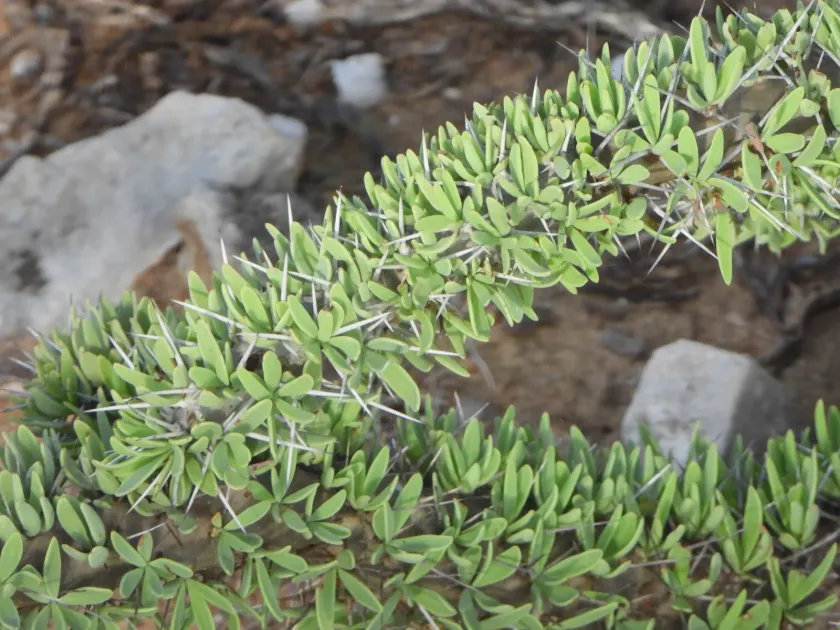
The plant features distinct spiny stems and scale-like leaves. Its botanical structure is designed to minimize transpiration, allowing it to survive harsh, desert-like climates where rain is scarce for most of the year.
For cultivation, this species requires full sun exposure and a well-draining, mineral-based substrate. It is essential to use a gritty mix to ensure that water does not remain around the roots, as moisture retention is the primary cause of death for this plant.
The climate requirements include high daytime temperatures and good air circulation. During the winter season, the plant must be kept dry and in a slightly cooler environment to enter a dormant phase, which is crucial for its long-term health.
In terms of agricultural management, Didierea trollii is strictly a low-maintenance, ornamental crop. It is rarely fertilized, and pruning is only necessary for cosmetic control of the plant's spread in glasshouse settings.
Main diseases and pests
Root rot is the most significant threat to Didierea trollii, usually triggered by excessive watering or soil mixes that are too dense and retain too much moisture.
Pests such as mealybugs can colonize the plant, taking advantage of the crevices between the sharp spines, making them difficult to detect and manage.
Spider mites are common in greenhouses with poor ventilation or low humidity, leading to the desiccation of the stem epidermis and stunted growth.
Fungal pathogens often target the plant when ambient humidity is high and airflow is insufficient, leading to stem lesions and systemic collapse.
Regular inspection of the plant's surface and maintaining a strict, bone-dry winter regime are the most effective ways to prevent these biological threats.