
Didierea madagascariensis
Didierea madagascariensis
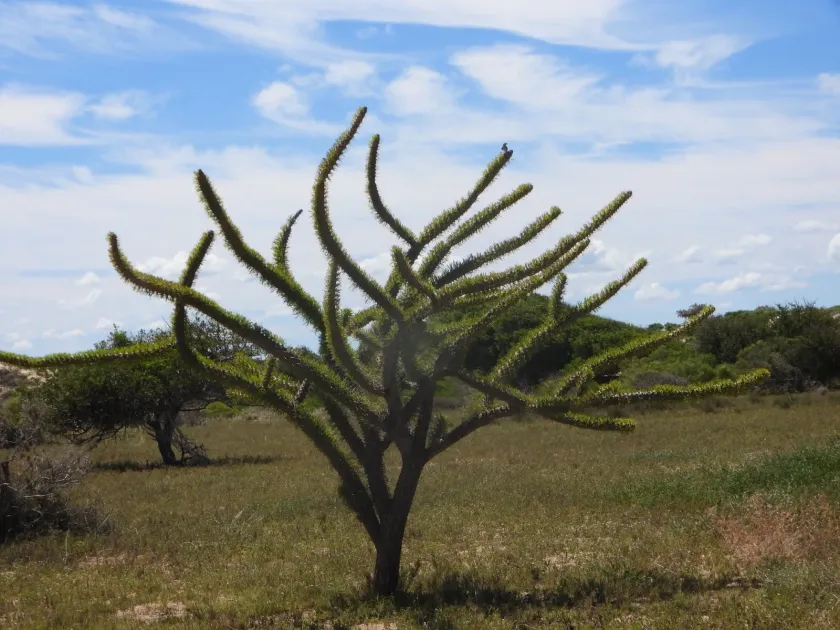
Description
Growing requirements
Didierea madagascariensis is a remarkable plant species endemic to Madagascar, belonging to the Didiereaceae family. In its native habitat, it thrives in dry, rocky terrain where water is scarce and sunlight is intense throughout the year.
Botanically, it is classified as a tree-like succulent. Its structural features include a robust, spiny trunk and spirally arranged leaves that minimize water loss. This plant can reach significant heights in the wild, though its growth rate is generally slow in cultivation.
Environmental requirements for this crop are strict. It demands full sun exposure to maintain its physiological health. Providing adequate light intensity is crucial, as any deficiency in illumination will result in weak growth and reduced drought tolerance.
Soil management for Didierea involves using a porous, inorganic-heavy substrate. A mixture of coarse sand, pumice, and minimal compost is ideal. Proper drainage is the most vital factor in preventing root asphyxiation and promoting healthy expansion.
Regarding climate, the plant is strictly frost-intolerant. It performs best in a warm, arid environment. In a professional horticultural setting, the ambient temperature should remain consistently above 15 degrees Celsius to prevent physiological distress.
Main diseases and pests
The primary threat to the health of Didierea madagascariensis is overwatering, which quickly leads to root rot and stem decay. Maintaining a strict dry-down cycle between irrigations is the standard practice for successful cultivation.
Pest management focuses on common succulent pests such as spider mites and mealybugs. These organisms thrive in dry environments and should be managed with proactive inspections and appropriate acaricides or systemic insecticides.