
Dichelostemma capitatum
Dichelostemma capitatum
Description
Sowing dates
Bulb planting is best performed in the autumn months. This timing allows the roots to establish themselves while the soil is still warm and moist from initial rains, ensuring the plant is prepared for spring growth.
Plant the bulbs at a depth of 3 to 4 inches, ensuring they are placed in well-draining soil. Spacing should be maintained at roughly 4 to 6 inches apart to prevent overcrowding and promote healthy air circulation around the foliage.
Seed propagation is possible but slow. Seeds require a period of cold stratification to break dormancy. Once sown, they should be kept in a cool, bright area until germination occurs, though flowering from seed can take several years.
Vegetative propagation via offsets is the preferred method for garden settings. During the summer dormancy, the clumps can be lifted and divided, allowing the smaller bulblets to be replanted in new areas to expand the population.
Care should be taken during the planting process to avoid burying the bulbs too deep, as this can delay emergence. A light mulch may be applied to protect the soil from freezing during the coldest months in more northern zones.
Growing requirements
Dichelostemma capitatum, commonly known as Blue Dicks, is a perennial bulbous plant belonging to the Asparagaceae family. It is native to the western regions of North America, where it thrives in open grasslands, oak woodlands, and chaparral habitats.
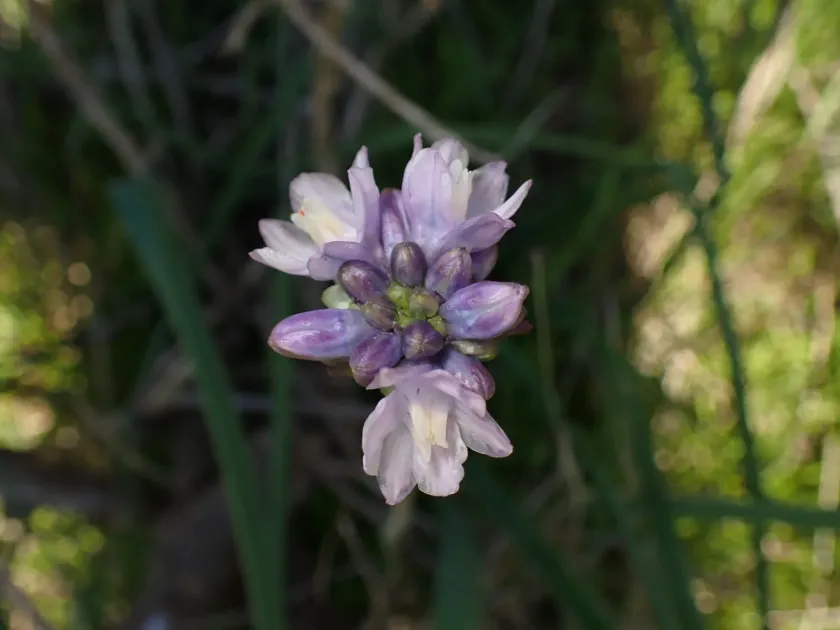
The plant features long, grass-like basal leaves and an unbranched, leafless stem topped with a dense cluster of violet-blue, funnel-shaped flowers. The bulb acts as a vital storage organ, enabling the plant to survive harsh, dry summers in a dormant state.
In terms of soil requirements, this species demands excellent drainage and a loose, gritty substrate. Heavy clay soils that retain moisture during the winter months often lead to bulb rot, which is the primary cause of failure in cultivation.
The climate should reflect the Mediterranean pattern, characterized by cool, moist winters that stimulate growth, and hot, dry summers that trigger dormancy. The plant is hardy but performs best when given a sheltered, sunny position.
Agricultural and gardening success relies on mimicking these natural conditions. Full sun exposure is essential for the plant to achieve vigorous growth and abundant flowering, whereas partial shade may cause the stalks to become weak and prone to lodging.
Main diseases and pests
Fungal diseases are the most significant threat to Dichelostemma capitatum, especially in poorly drained soils. Botrytis and various forms of soft rot can destroy the bulb entirely if moisture levels remain consistently high.
Pests such as wireworms and bulb mites can cause physical damage, which often serves as an entry point for secondary bacterial infections. Regular inspection of bulbs before planting can help identify affected specimens.
Small mammals, particularly voles and mice, are known to consume the nutrient-rich bulbs. Implementing protective barriers like underground wire mesh cages is a common and effective strategy in areas where wildlife damage is frequent.
Nematodes are another concern that can lead to stunted growth and yellowing of the leaves. Avoiding sites where other susceptible bulb crops were recently grown helps to maintain soil health and reduce pest pressure.
To prevent these threats, it is vital to prioritize good cultural practices, such as ensuring proper spacing, avoiding over-fertilization with nitrogen, and using fungicide treatments on bulbs if previous planting history suggests potential pathogens.