
Dichapetalum cymosum
Dichapetalum cymosum
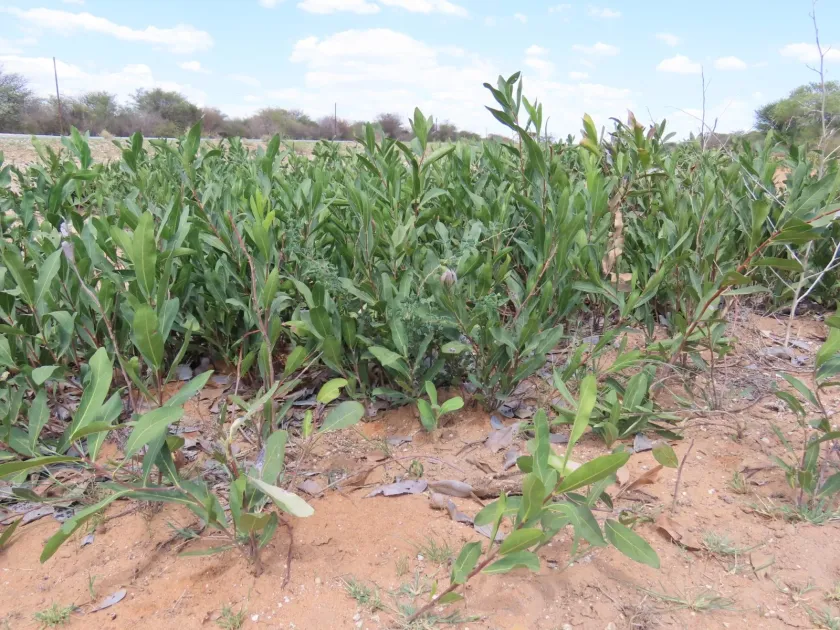
Description
Growing requirements
Dichapetalum cymosum is a low-growing shrub belonging to the Dichapetalaceae family, native to southern Africa. It is widely known in agronomy not as a crop, but as a severe hazard due to its highly specialized survival mechanisms.
The plant features an extensive underground rhizome system that can reach depths of up to 15 meters, making it exceptionally drought-resistant. This deep root structure makes it nearly impossible to eradicate through simple mowing or burning.
It typically thrives in acidic, sandy soils within savannah ecosystems. Due to its adaptation to nutrient-poor soils, it does not require fertilizers or irrigation, allowing it to outcompete native pasture grasses.
Botanically, it presents as a woody shrub with leathery leaves, producing small, cymose inflorescences. It is a resilient perennial that recovers rapidly from environmental stress, including wildfires.
From an agricultural standpoint, it has no beneficial use. Agronomic practices focus exclusively on vegetation management, landscape surveying, and exclusion fencing to protect livestock from grazing in infested areas.
Main diseases and pests
The primary threat of Dichapetalum cymosum is its extreme toxicity. It contains high levels of sodium fluoroacetate, a compound that disrupts cellular metabolism and is fatal to ruminants and other livestock.
The plant is effectively free from agricultural pests and diseases. Its chemical defenses act as a powerful deterrent to insects and herbivores, allowing it to colonize large tracts of land without natural constraints.
Livestock losses are most frequent during the dry season. When palatable forage is scarce, hungry animals often consume the green shoots of the plant, leading to mass poisoning incidents.
Control of this species is difficult and expensive. Chemical control with systemic herbicides is the standard practice, requiring repeated applications to ensure the deep root system is finally destroyed.
Prevention is the best strategy. Farmers are advised to map the infestation zones and prevent livestock access to these areas, particularly during times of drought or forage depletion.