
Diascia hybrids
Diascia hybrids
Description
Sowing dates
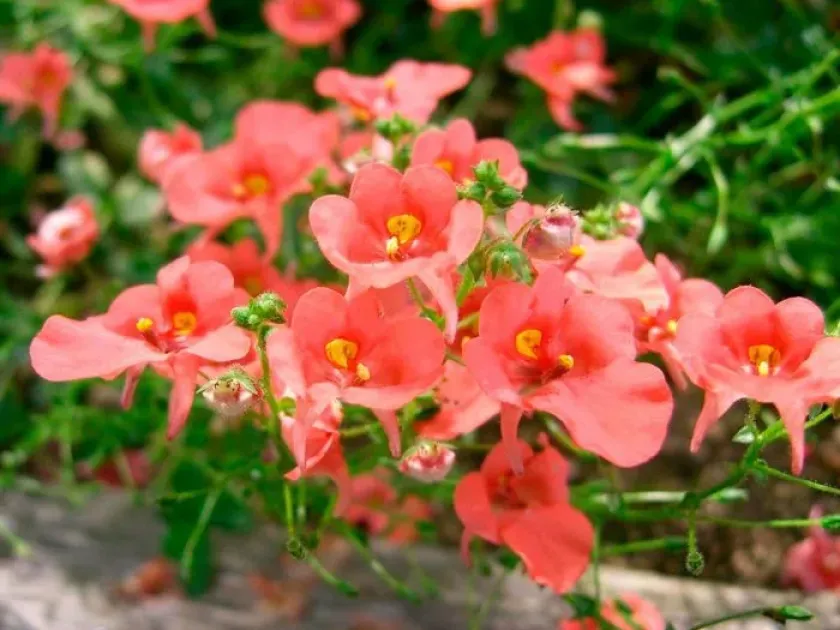
Diascia hybrids are charming flowering plants belonging to the Scrophulariaceae family. Originating from South Africa, these plants are widely popular for their cascading habit and masses of delicate, spurred flowers that bloom throughout the warmer months.
Seeds should be sown indoors in late winter or early spring, approximately 8 to 10 weeks before the last expected frost. The seeds are very small and require light to germinate, so they should be surface-sown on a moist, fine-textured potting medium.
Maintaining a constant temperature of 18–20 degrees Celsius is crucial for uniform germination. A clear plastic cover helps to retain humidity, which is essential during the initial stages of seedling development.
Once the seedlings have developed two sets of true leaves, they should be pricked out and transplanted into individual pots. This practice encourages the development of a robust root system before the plants are eventually moved outdoors.
Young plants can be hardened off and planted outside once all risk of frost has passed. They thrive in pots, hanging baskets, and as border bedding, adding a splash of color to various landscape designs.
Growing requirements
Diascia hybrids require a sunny location to produce their best bloom display, although they can tolerate light shade in hotter climates. Adequate sunlight is key to preventing weak, leggy growth.
The soil should be fertile, well-draining, and rich in organic matter. Good drainage is vital, as the plant is susceptible to root rot if left in waterlogged conditions, particularly in container gardening.
Regular watering is necessary to keep the soil consistently moist but not saturated. During prolonged periods of high heat, the plants may temporarily stop blooming, but they typically recover quickly with regular watering and cooler temperatures.
Fertilization with a balanced liquid plant food every two weeks will promote continuous flowering. Using a phosphorus-rich fertilizer can specifically enhance the color and quantity of the blooms.
Pruning is an essential part of the care routine for Diascia hybrids. Cutting back the stems by a few centimeters after the first flush of flowers encourages the plant to produce new, vigorous growth and further waves of blossoms.
Main diseases and pests
Aphids are common pests that tend to cluster on the tender tips of new shoots. Early detection and treatment with insecticidal soap or appropriate systemic insecticides can prevent large-scale infestations.
Spider mites can become problematic during hot, dry spells, often appearing as tiny webs on the undersides of leaves. Maintaining humidity and regular inspection are the best preventative measures against these pests.
Root rot is a major threat caused by poor drainage and excessive watering. To mitigate this risk, ensure containers have adequate drainage holes and use a potting mix that allows for sufficient air circulation around the roots.
Powdery mildew may appear as a dusty white coating on foliage, especially when air circulation is poor and humidity levels fluctuate significantly. Fungicides and improved spacing between plants can help control this fungal issue.
Slugs and snails can be a nuisance for young plants in the early season. Using physical barriers, such as copper tape around pots or organic slug pellets, can effectively protect the plants during their vulnerable growth stages.