
Dendropanax arboreus
Dendropanax arboreus
Description
Growing requirements
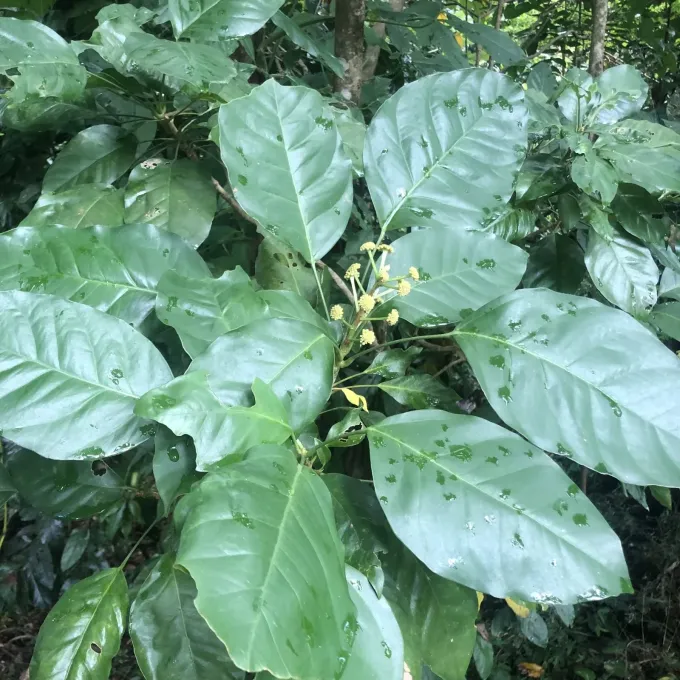
Dendropanax arboreus is a robust evergreen tree or shrub belonging to the Araliaceae family. Native to the tropical and subtropical regions of the Americas, this species is well-adapted to humid forest environments where it occupies a significant niche in the canopy.
The plant thrives in regions with warm temperatures and high humidity, avoiding extreme frosts which can damage its foliage. A well-drained, nutrient-rich soil that mimics the forest floor is ideal for ensuring steady development and strong growth.
Regarding light conditions, the species exhibits flexibility, though it performs best in partial shade. Direct, harsh sunlight can sometimes scorch young leaves, whereas deep shade may slow down the metabolic rate and overall biomass production of the tree.
Soil management requires attention to moisture control; the substrate should remain consistently moist but never waterlogged. Incorporating organic mulch helps retain soil moisture and improves nutrient availability, promoting a healthier root system over time.
Botanically, Dendropanax arboreus is recognized for its glossy, coriaceous leaves which can vary in shape from entire to lobed. This morphological diversity makes it an excellent candidate for both ornamental purposes and ecosystem restoration projects in tropical climates.
Main diseases and pests
The main agronomic challenges for Dendropanax arboreus involve fungal pathogens linked to excessive soil moisture. Root rot is a common issue that necessitates precise irrigation management and the installation of effective drainage systems in cultivation zones.
Insect pests, particularly scale insects, can pose a threat by extracting sap from the foliage, which weakens the plant's immune response. Regular inspection is required to manage these populations before they cause significant aesthetic or physiological damage.
Spider mites are another concern, especially in greenhouse or low-humidity environments. Their presence can be identified by fine webbing on the undersides of leaves, which requires immediate intervention with acaricides or humidity adjustments.
Bacterial leaf spots can emerge under poor ventilation conditions, emphasizing the need for proper plant spacing. Adequate airflow around the canopy is essential to minimize the risk of pathogen transmission across the plantation.
Integrated Pest Management (IPM) strategies, combining biological controls and targeted chemical treatments, are recommended for maintaining large-scale plantings. Maintaining overall plant hygiene, including the removal of dead or decaying biomass, is a primary preventative step.
Harvesting
The economic utility of Dendropanax arboreus spans from traditional timber harvesting to its role in modern landscaping. The wood is utilized for various craft purposes due to its moderate texture and workability, making it valuable in local rural economies.
Propagation is typically achieved through seeds harvested from mature fruits. Proper cleaning and stratification are necessary to break dormancy and ensure high germination rates, which is crucial for efficient nursery operations.
In nursery settings, seedlings are often cultivated in containers to ensure the development of a healthy root ball before outplanting. This practice increases the survival rate of the trees significantly when established in reforestation or garden sites.
Periodic maintenance involves selective thinning of branches to encourage a desirable growth habit. This practice also ensures that the tree maintains its structural integrity as it ages, preventing breakages under its own weight or adverse weather conditions.
As a nectar-producing plant, the species plays a positive role in supporting local pollinator populations. Honey production from such trees is considered a secondary benefit in regions where it is grown in mixed-species plantations.