
Indian datura
Datura innoxia Mill.
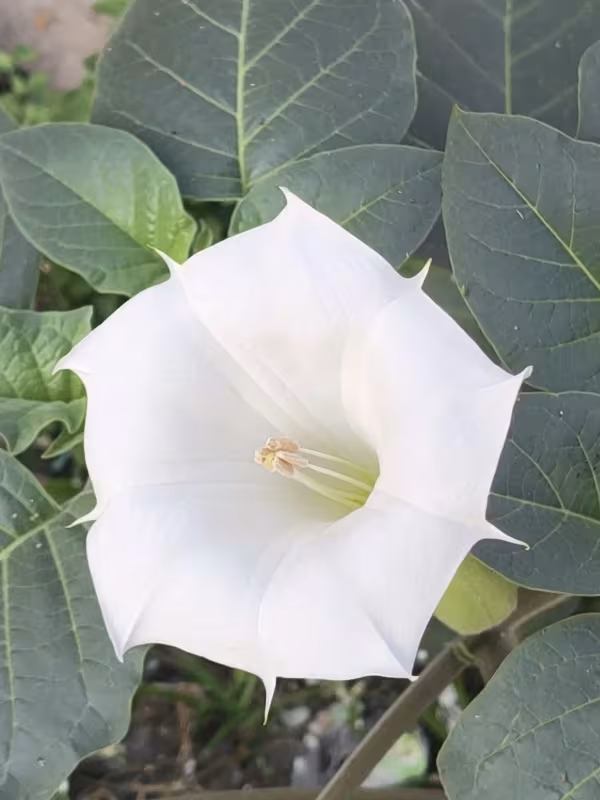
Description
Sowing dates
Indian datura (Datura innoxia Mill.), belonging to the Solanaceae family, is typically propagated by seeds. For professional cultivation, starting the plants in a greenhouse to produce transplants is the most reliable method.
Seeds have a hard coat, so soaking them in water for 24 hours prior to sowing can significantly improve germination rates. They should be sown at a depth of 2 to 3 centimeters in a well-draining soil mix.
The optimal time for transplanting to the field is after the danger of frost has passed and soil temperatures have consistently reached at least 15 degrees Celsius. Proper spacing, typically 60-70 cm between rows, ensures adequate airflow and plant health.
Direct seeding in the field is possible in warmer climates, but it requires careful management of soil moisture to ensure success. Weed control during the early stages of establishment is critical for plant development.
Greenhouse-started seedlings should be hardened off for a week before final planting to help them adjust to the outdoor environment and reduce transplant shock.
Growing requirements
Datura innoxia is a heat-loving and sun-loving plant that requires full sun exposure to thrive and maximize its alkaloid concentration. It is well-adapted to warm, sunny regions with long growing seasons.
Well-drained, fertile soil is essential for high biomass production. The plant prefers slightly acidic to neutral soil pH. Waterlogging must be avoided at all costs, as the roots are highly susceptible to rot in saturated conditions.
Regular irrigation is necessary throughout the growing season, particularly during the flowering phase. Drought stress can lead to premature leaf drop and reduce the final harvest quality.
Tilling between rows is recommended to improve soil aeration and manage weed competition. This promotes stronger root systems and healthier overall growth of the plant canopy.
Balanced fertilization with a focus on phosphorus and potassium encourages reproductive development and the synthesis of secondary metabolites in the leaves.
Yield
The yield of Indian datura is primarily measured by the total biomass of dried leaves. In commercial operations, high yields are achieved by optimizing planting density and nutrient management.
The primary value of the crop lies in the production of tropane alkaloids, mainly scopolamine. The concentration of these compounds is highest at the onset of flowering, dictating the ideal harvest timing.
Multiple harvests of leaves are possible within a single growing season if the plants are maintained properly. This staggered harvest approach allows for a more efficient processing schedule in the drying facility.
Seed production is an additional yield component, but it requires allowing the capsules to reach maturity. Proper management of the plant's resources is needed if both leaf and seed yields are desired.
Consistency in harvest and post-harvest handling is critical to ensure the uniformity of the active ingredients, which is highly prized by pharmaceutical manufacturers.
Main diseases and pests
Datura innoxia is prone to several diseases common to the Solanaceae family, including late blight and various fungal leaf spots. High humidity levels significantly increase the risk of these infections.
Pests like aphids, spider mites, and the Colorado potato beetle can cause severe foliage damage. Integrated pest management strategies, including biological controls, should be implemented to minimize chemical use.
Root rot caused by Phytophthora species is a major threat in fields with poor drainage or over-irrigation. Proper site selection and soil management are the best preventative measures against soil-borne pathogens.
Viral infections can cause plant stunting and mottled foliage. Since these are often transmitted by sap-sucking insects, controlling the insect population is the most effective way to prevent virus spread.
- Late blight (Phytophthora infestans).
- Aphid infestations.
- Colorado potato beetle.
- Root and stem rot.
- Cucumber mosaic virus.
Harvesting
Harvesting usually begins when the plants enter the flowering stage. Leaves are collected systematically from the bottom of the plant upward as they reach their full maturity.
Manual harvesting is often preferred for high-quality medicinal material to avoid including stems or damaged tissue. This ensures that the raw material meets strict purity standards for drug extraction.
Seed capsules should be harvested once they begin to brown but before they split open. This timing is essential to avoid significant seed loss due to natural shattering in the field.
Immediate drying is required to stabilize the chemical composition of the plant material. The drying process should be carried out at controlled temperatures to preserve the sensitive alkaloids.
Finished goods are stored in a cool, dark, and dry environment. Protection from moisture and direct sunlight is vital to maintain the shelf life and potency of the stored herbal raw materials.