
Daniellia oliveri
Daniellia oliveri
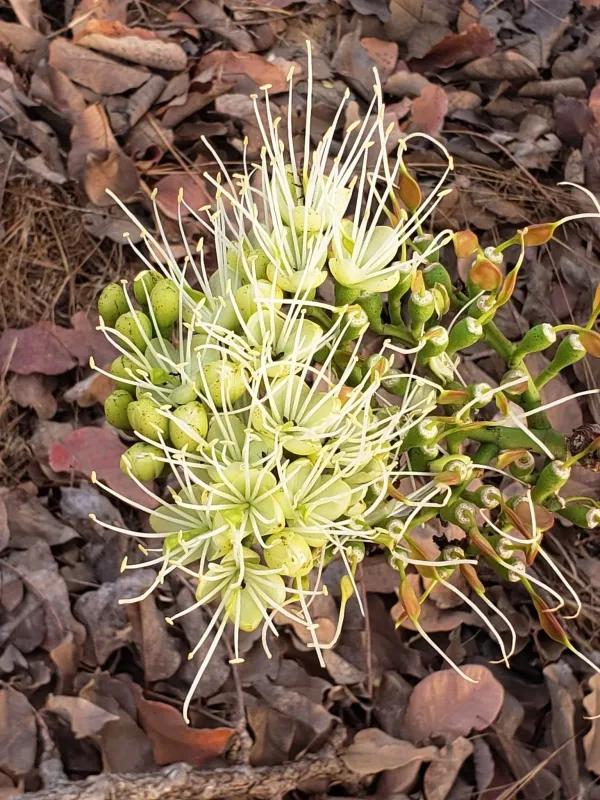
Description
Sowing dates
Propagation of Daniellia oliveri is primarily achieved through seeds collected during the end of the dry season. Seeds should be handled carefully to maintain their viability, which remains high under dry storage conditions.
Nursery cultivation is recommended, using pots with a well-draining soil mix to prevent fungal issues. Seeds typically germinate within three to four weeks when kept at consistent warm temperatures.
Seedlings require partial shade during their earliest stages of development in the nursery to prevent dehydration. Gradually hardening them off before transplanting is essential for survival.
Outplanting is best scheduled at the onset of the rainy season to allow the root system to establish itself before the return of the harsh dry months.
Strategic planting spacing, ideally 6 to 10 meters apart, allows for maximum canopy development and resource capture, which is vital for long-term tree health in forestry projects.
Growing requirements
Daniellia oliveri belongs to the Fabaceae family and thrives in the Guinean and Sudanian savanna zones of Africa. It is a heliophytic species that demands full exposure to direct sunlight.
The species demonstrates remarkable resilience to drought, supported by its deep taproot system. It grows best in regions with annual rainfall between 800 mm and 1500 mm, preferring a distinct dry season.
Soil requirements are relatively flexible; however, the tree performs best in deep, sandy-loam soils. It absolutely requires sites with excellent drainage to avoid waterlogging and root rot.
The optimal temperature range for this species is 20 to 35 degrees Celsius. It is well-adapted to the high temperatures found in its native tropical range, showing minimal heat stress during the dry season.
Maintenance involves weed control around the base of the saplings for at least the first three years of growth to reduce competition for nutrients and moisture.
Yield
The tree provides valuable timber that is highly regarded for its durability and resistance to termites. It is widely used in light to medium construction, furniture making, and joinery.
Resin, known as Ilorin balsam or West African copal, is harvested by making small incisions in the bark. This product is commercially valuable for producing varnishes and incense materials.
Mature specimens can reach heights of 20 to 30 meters, with substantial trunks suitable for timber extraction. Sustainable management ensures long-term yield without depleting the forest resource.
Besides commercial products, the tree provides ecological services by improving soil structure and preventing erosion in savanna landscapes through its extensive root network.
Traditional medicinal use of the bark and leaves highlights the diverse economic value of this species for local communities in West and Central Africa.
Main diseases and pests
Young saplings are susceptible to damage by browsing animals, including livestock and wild herbivores, which necessitates protective fencing during the initial growth years.
Root pathogens can pose a threat if the soil moisture levels are managed incorrectly, leading to decay in the root system. Proper site selection and drainage are the primary preventative measures.
Wood-boring insects can attack mature trees, potentially impacting the quality of the timber. Regular inspections of the stands help identify infestations before they become systemic.
Over-tapping for resin can weaken the tree's defense mechanisms, making it more prone to infections. Adherence to conservative tapping cycles is crucial for maintaining tree health.
Uncontrolled wildfires represent a significant threat to young plantations. Managing the undergrowth and creating firebreaks are essential practices in savanna-based agroforestry.