
Cyrtococcum patens
Cyrtococcum patens
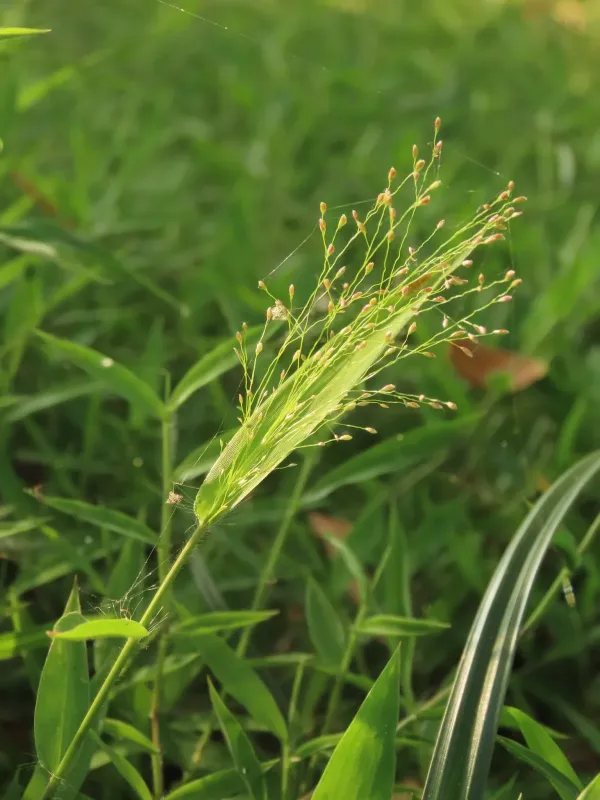
Description
Growing requirements
Cyrtococcum patens, belonging to the Poaceae family, is a perennial grass widely distributed throughout the tropical regions of Asia, extending from India to the Philippines.
The plant thrives in humid tropical climates, typically inhabiting forest floors, edges of clearings, and moist grasslands where temperatures remain consistently warm throughout the year.
Regarding soil requirements, it performs best in fertile, moist, and well-drained soils, although it shows a remarkable capacity to adapt to various soil textures and moderate acidity.
The grass is primarily valued as a forage crop, providing nutritious grazing material for livestock. Its ability to grow in shaded conditions makes it a versatile component in agroforestry systems.
Morphologically, the plant is characterized by its spreading habit and delicate panicles, which contribute to its effectiveness in soil stabilization and erosion control on sloped terrains.
Main diseases and pests
The primary threats to the health of the crop include various fungal infections, particularly leaf spot diseases that proliferate under conditions of high humidity and stagnant air.
Pest pressure is mainly exerted by leaf-eating caterpillars and certain sap-sucking insects that can significantly reduce the biomass production if left unmanaged.
Root-knot nematodes can also affect the vitality of the plant, especially when it is grown in environments with poor crop rotation practices or degraded soil structure.
Managing these threats involves ensuring adequate plant spacing to promote airflow and implementing strategic mowing practices to remove infected or damaged plant material.
Integrated pest management strategies, focusing on biological controls and maintaining soil nutrient balance, are essential for ensuring long-term yield stability in forage cultivation.