
Cutandia dichotoma
Cutandia dichotoma
Description
Growing requirements
Cutandia dichotoma belongs to the Poaceae (grass) family. It is an annual herbaceous plant typically found in arid and semi-arid regions, showing a strong preference for sandy and rocky soils.
The plant is a typical representative of Mediterranean flora and is distributed across countries in the Middle East, North Africa, and Southern Europe. It is well-adapted to high levels of solar radiation and tolerates extended periods of drought.
For successful development, Cutandia dichotoma requires well-drained substrates. In its natural habitat, it occupies niches with low organic matter content, often colonizing degraded pastures and roadsides.
The species is noted for its high ecological plasticity within its range and its ability to rapidly complete its life cycle during the short wet season. This trait allows the plant to compete effectively with other ephemeral species.
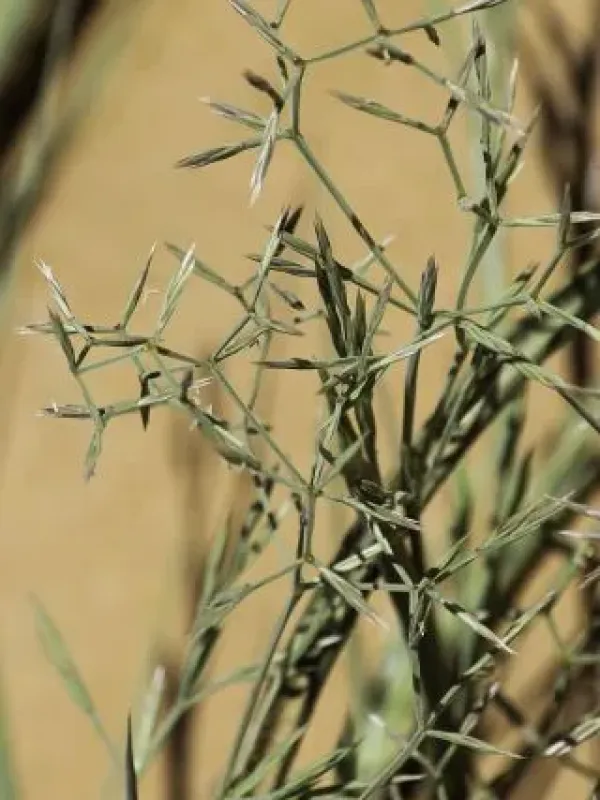
Biologically, the plant is an annual grass characterized by highly branched stems, which is the origin of the specific epithet "dichotoma." The leaf blades are generally narrow, which helps in minimizing water loss through transpiration.
Yield
Cutandia dichotoma is not considered a high-yielding agricultural crop in the traditional sense. Its economic use is limited to livestock grazing on natural rangelands, where it serves as a supplementary biomass source during the early spring period.
The plant's productivity is directly dependent on the amount of precipitation received during the winter and spring months. In years with favorable moisture, it can form dense tufts suitable for sheep and goat grazing.
The nutritional value of the grass is highest during the vegetative phase before the onset of heading. Once the stems become woody, palatability and fiber digestibility decrease sharply, making it less attractive to livestock.
In agronomic practice, breeding programs for this species are virtually non-existent. Its potential lies primarily in phytoremediation and the stabilization of shifting sands, where the plant can hold soil in place with its root system.
Its agricultural utilization is limited by small seed size and low green mass yield compared to highly productive forage grasses. The primary role of the species is maintaining biodiversity in arid ecosystems.
Main diseases and pests
This grass species possesses high resistance to specific diseases common in cultivated cereals. This is attributed to its wild origin and long-term evolution in extreme environmental conditions.
Among potential threats, rust fungi may occasionally infect the leaves during unusually wet springs. However, there are no documented records of massive epiphytotics affecting Cutandia dichotoma populations.
Pests such as aphids or leafhoppers may colonize the plants, but their impact is typically not critical to the population. The plant is capable of recovery due to its high seed production capacity.
The primary threat to the species' distribution range is overgrazing, which leads to pasture degradation and the displacement of the grass by more aggressive weed species.
Despite the lack of specialized agronomic protection measures, it is essential to manage grazing intensity carefully to support the natural regeneration of Cutandia dichotoma rangelands.