
California dodder
Cuscuta californica
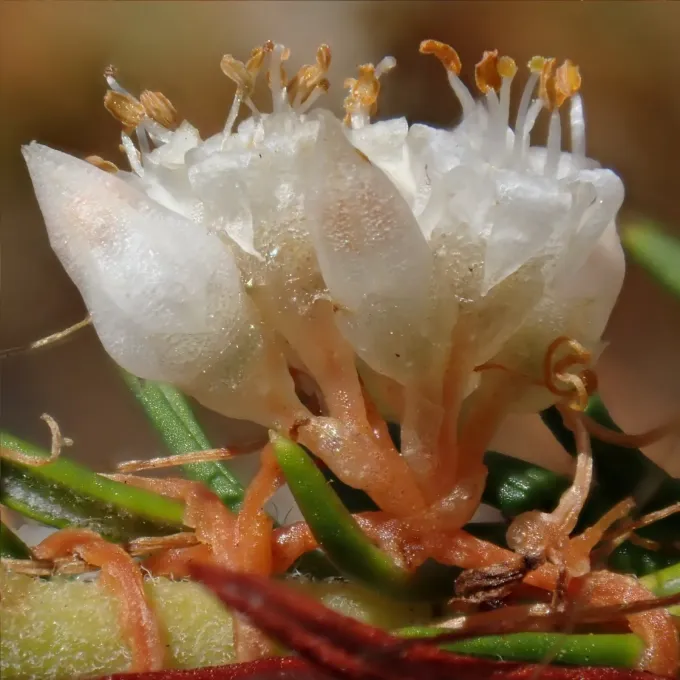
Description
Growing requirements
California dodder (Cuscuta californica) is a parasitic plant belonging to the Convolvulaceae family. Unlike conventional agricultural crops, it lacks chlorophyll and true roots, relying entirely on host plants for sustenance through specialized structures called haustoria.
Native to the southwestern regions of North America, including California and parts of Mexico, this species thrives in arid and semi-arid environments. It has evolved to find and colonize various host species, ranging from perennial shrubs to herbaceous plants.
Botanically, the plant is characterized by thread-like, yellowish to orange stems that entwine around the host. Once established, it connects to the host's vascular system, extracting water, carbohydrates, and minerals, which severely impairs the host's vigor.
The plant requires adequate temperature and sunlight to germinate and grow rapidly. It does not have specific soil requirements, as its nutritional intake is completely decoupled from soil quality; it prefers ecosystems where suitable host density is sufficient for its survival.
Reproduction is primarily through small, durable seeds that can persist in the soil for several years. Successful germination is often synchronized with the seasonal development of host plants, ensuring that the parasite can quickly secure a nutrient source upon emergence.
Main diseases and pests
California dodder is recognized as a significant agricultural threat rather than a useful crop. It functions as a biological pest, and its presence in cultivated fields often triggers strict quarantine regulations due to its ability to decimate crop yields.
The main threat posed by this species is the severe reduction of host vitality and productivity. In severe infestations, the parasite completely covers the crop, creating dense mats that block light and facilitate the spread of secondary pathogens.
It is an efficient vector for various plant viruses, as its parasitic connection allows for the rapid transmission of pathogens between infected and healthy tissues. This ability makes dodder a major concern in integrated pest management programs.
Control methods are difficult because the parasite is physically attached to the crop. Management strategies focus on preventive measures, such as using certified weed-free seeds and sanitizing equipment to prevent the dispersal of seeds and stem fragments.
Chemical control is rarely effective as selective herbicides that could kill the dodder often harm the host crop as well. Integrated approaches, including crop rotation with non-host species and rigorous field sanitation, remain the most reliable way to manage infestations.