
Crosswort
Cruciata laevipes
Description
Growing requirements
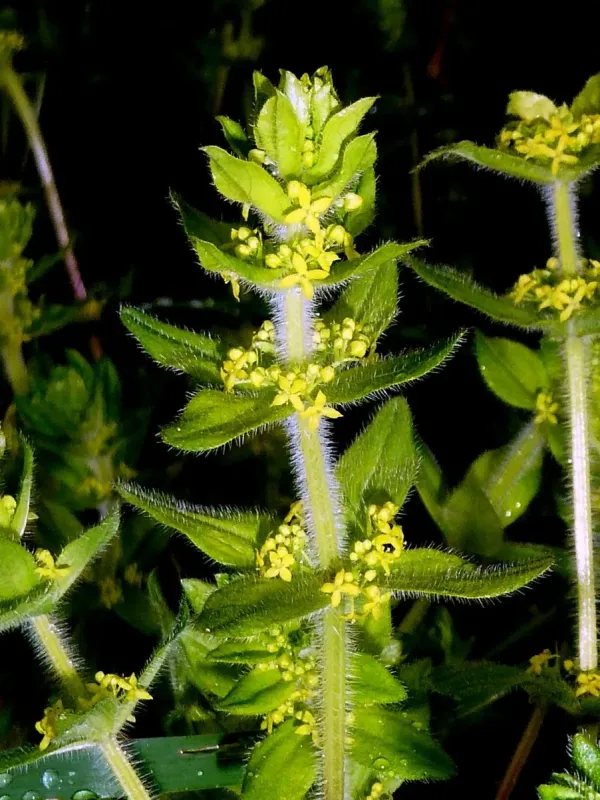
Crosswort (Cruciata laevipes) is a perennial herbaceous plant belonging to the Rubiaceae family. It is easily identified by its square-shaped stems and leaves arranged in whorls of four, giving the plant its distinct appearance.
The plant is native to a wide range of habitats across Europe and temperate Asia. It thrives in fertile, moist soils found in shaded woodlands, hedgerows, and meadow borders, where it can establish a robust root system.
Regarding climate, it prefers regions with moderate temperatures and reliable rainfall. While it can withstand periods of coolness, it is highly sensitive to extreme drought, which can significantly stunt its growth cycle.
Optimal agricultural practice involves selecting well-drained loamy soils enriched with organic matter. Regular moisture supply is critical during the spring growth phase to ensure strong foliage development and successful propagation.
Economically, crosswort is primarily valued as a component of mixed fodder in natural grasslands. Its biochemical profile makes it a useful supplement, though it is rarely cultivated as a monoculture crop.
Main diseases and pests
The most common threats to Crosswort include fungal infections, particularly powdery mildew, which can develop rapidly when humidity levels are high and air circulation is insufficient.
Pests such as aphids and small leaf-eating beetles often target the succulent new growth during the early spring. These can reduce the yield and impact the overall vitality of the perennial plants.
Cultural control, including proper plant spacing and weed management, is essential for maintaining health. Ensuring that the foliage dries quickly after rain significantly lowers the risk of disease.
Biological pest control is encouraged, especially when the crop is intended for pharmaceutical or fodder uses where chemical residue must be avoided. Monitoring the plant density helps in identifying early warning signs.
Root rot remains a concern if the soil is poorly drained. Keeping the soil aeration high through periodic light cultivation is a standard technique to prevent stagnation-related health issues.