
Smooth crosswort
Cruciata glabra
Description
Growing requirements
Smooth crosswort (Cruciata glabra) is a perennial herbaceous plant belonging to the Rubiaceae family. This species is native to mountainous and forested regions of Europe and the Caucasus, often found in subalpine meadows.
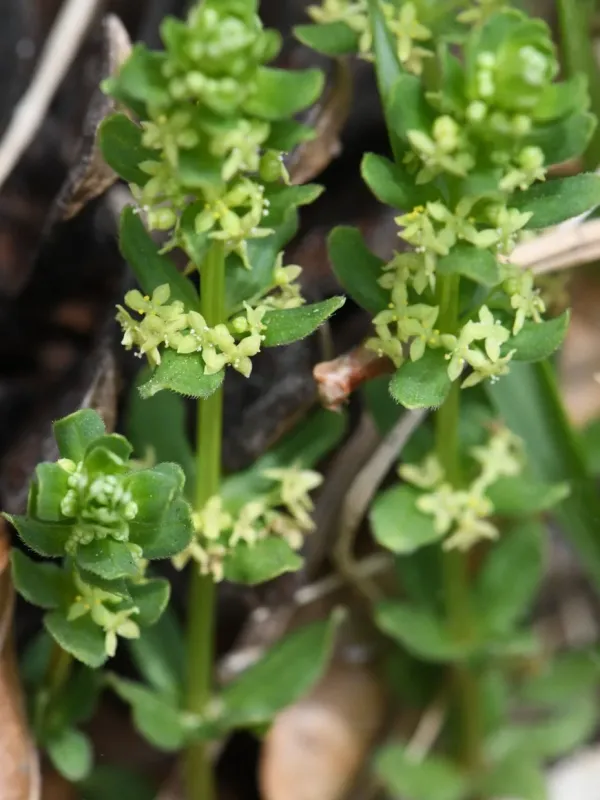
The plant is distinguished by its four-angled stems and whorled leaves, usually arranged in groups of four. It possesses a creeping rhizome that enables the plant to spread effectively and form dense vegetative mats in its habitat.
This species thrives in moderately moist, nutrient-rich soils with a neutral or slightly acidic pH. It is particularly well-adapted to partially shaded environments, such as forest edges or clearings, where it benefits from high levels of organic matter.
Climatic requirements are focused on cool to temperate conditions. The plant shows high winter hardiness and can withstand freezing temperatures, which is typical for its montane range of distribution.
From an agricultural standpoint, it serves as a component of natural hay meadows. It contributes to the overall nutritional value of forage, although it is not typically cultivated as a monoculture crop.
Main diseases and pests
The primary threats to Cruciata glabra include fungal infections like powdery mildew, which thrive in conditions of high atmospheric humidity and poor ventilation. These pathogens can stunt growth during the peak vegetation season.
Common pests include leaf-eating insects and mollusks, such as slugs and snails, which can damage the foliage in moist environments. These are rarely problematic unless the population density becomes excessively high.
Management practices focus on ensuring good field drainage to prevent waterlogging. Reducing moisture accumulation is the most effective way to limit the spread of soil-borne diseases.
Integrated pest management in natural meadows involves periodic mowing to encourage air circulation. This practice helps maintain the health of the community and prevents the accumulation of dead plant debris.
Under favorable ecological conditions, the plant displays good resilience. Its ability to regrow from rhizomes allows it to recover effectively from minor pest or disease outbreaks without the need for chemical intervention.