
Thai onion plant
Crinum thaianum
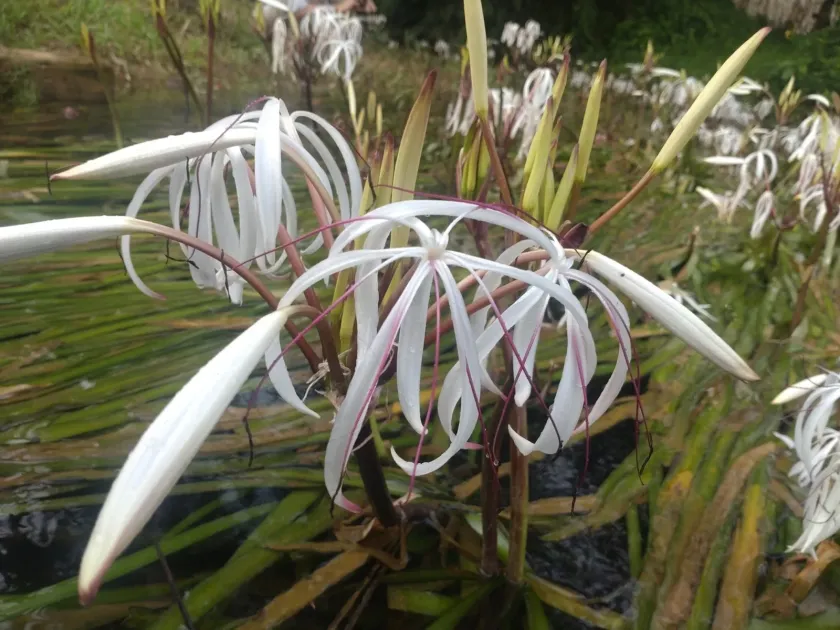
Description
Growing requirements
The Thai onion plant (Crinum thaianum) is an impressive aquatic plant belonging to the Amaryllidaceae family. It is a bulbous species that grows entirely submerged in its natural habitat.
Native to Thailand, this plant is typically found in rivers and streams with running water. Its botanical structure includes a large bulb and long, ribbon-like leaves that can reach substantial lengths in optimal conditions.
The plant requires a spacious aquarium to accommodate its growth. A deep, nutrient-rich substrate is essential for the healthy development of its extensive root system.
Water parameters should be strictly maintained. A temperature range of 22 to 28 degrees Celsius is ideal, along with a stable pH level to prevent the plant from shedding its leaves.
Lighting should be moderate to high to ensure continuous growth. Regular water circulation is highly recommended, as it mimics the plant's natural river environment and helps prevent sediment buildup on the leaves.
Main diseases and pests
The most common threat to Crinum thaianum is bulb rot, usually caused by planting the bulb too deeply in the substrate or by poor water quality in the aquarium.
Algae infestation is a significant problem; if the leaves are exposed to excessive light or imbalanced nutrients, they quickly become covered in algae, which inhibits growth.
Snails, particularly large species, may graze on the soft tips of the leaves, damaging the aesthetic appeal and overall health of the plant.
Nutrient deficiency, specifically iron and potassium, manifests as yellowing of the foliage, which eventually leads to leaf tissue degradation if not addressed with appropriate fertilizers.
Inadequate water flow can lead to the accumulation of organic waste around the crown, creating an environment conducive to harmful bacteria and pathogen development.