
Bell crinum
Crinum campanulatum
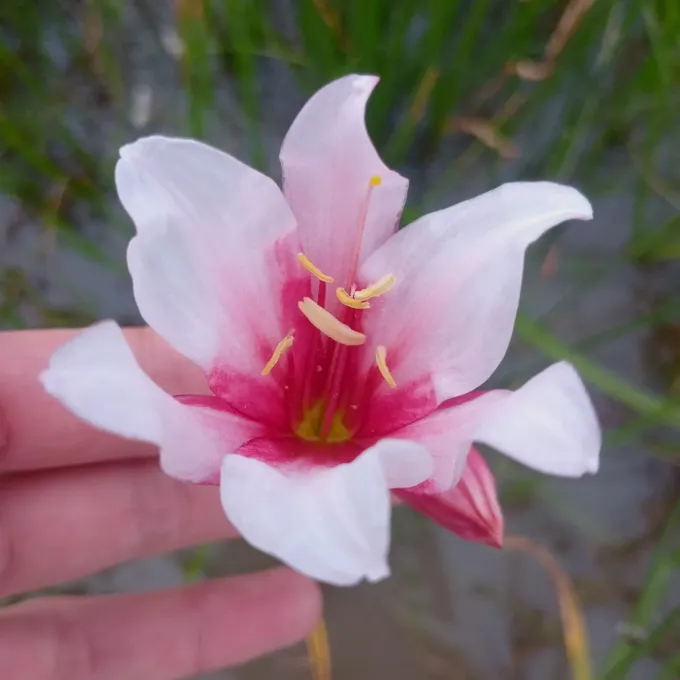
Description
Growing requirements
Crinum campanulatum, known as the bell crinum, is a perennial bulbous plant belonging to the Amaryllidaceae family. Originating from the swampy regions of South Africa, it is uniquely adapted to aquatic or semi-aquatic environments.
The plant thrives in soil with high organic matter content, requiring constant moisture to maintain its physiological functions. In cultivation, it performs best when planted in areas that replicate its native wetland habitats.
Ideal growth conditions include full sun to partial shade. Exposure to bright light is critical for the plant to produce its characteristic bell-shaped flowers, which typically emerge during the active growing season.
Agronomic management involves maintaining a consistent water supply. Unlike most bulbous species, the bell crinum can withstand periods of saturation, making it a distinct choice for landscape management near water bodies.
During the dormant stage, it is necessary to reduce irrigation to prevent bulb rot while ensuring the soil does not completely dehydrate. Balanced fertilization during the spring encourages robust vegetative growth.
Main diseases and pests
The bell crinum is susceptible to various pests, most notably aphids and spider mites. These insects tend to infest the leaf surfaces, causing yellowing and stunted development if left unmanaged.
Fungal pathogens, such as Stagonospora curtisii (red blotch disease), represent a significant threat to bulb integrity. Good air circulation and avoiding overhead watering can help mitigate the risk of infection.
Bulb rot is a common issue caused by pathogens residing in waterlogged soil that lacks proper oxygenation. Ensuring that the planting site has adequate drainage is essential even for this water-loving species.
Mealybugs can also pose a problem, hiding in the leaf axils. Periodic inspections and the application of horticultural oils or systemic insecticides are recommended for effective population control.
To ensure plant health, maintain a strict monitoring schedule for early signs of distress. Integrating cultural practices like removing dead foliage and maintaining clean growing areas helps keep the plant population vibrant.