
Costus erythrophyllus
Costus erythrophyllus Loes.
Description
Growing requirements
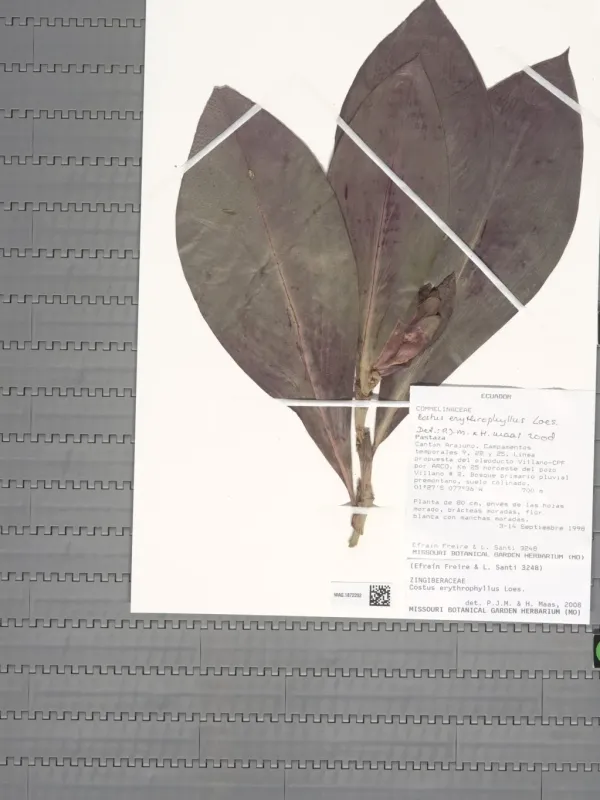
Costus erythrophyllus Loes. is a distinguished tropical plant belonging to the Costaceae family, native to the rainforests of South America. It is recognized for its unique foliage, where the underside of the leaves presents a striking red or purple hue, contrasting with the vibrant green top surface.
The botanical structure of the plant consists of robust, upright stems that grow from a perennial rhizome system. In its native habitat, it thrives in the understory layer, requiring filtered light to maintain its characteristic pigmentation and prevent the foliage from scorching under direct sunlight.
To cultivate this species successfully, agronomists must provide a warm, humid environment where temperatures remain consistently between 22 and 28 degrees Celsius. Exposure to cold drafts or temperatures below 15 degrees Celsius can cause significant physiological stress and growth arrest.
The soil requirements for this crop focus on high organic matter content, excellent drainage, and slightly acidic pH levels. A mix of peat, perlite, and decomposed compost is often used to create a substrate that retains sufficient moisture without becoming waterlogged, which is vital for root health.
Cultural maintenance involves frequent irrigation and regular misting to keep the ambient humidity above 75 percent. Fertilizer application should be focused on the peak growing season, using a balanced nitrogen-phosphorus-potassium formula to support the development of the lush, red-backed foliage.
Main diseases and pests
Spider mites are the most common pests affecting this plant, especially when ambient air becomes too dry. Infestations lead to stippling on the leaves and can result in significant reduction of the plant's decorative value and general vigor if not treated with appropriate miticides or biological controls.
Root rot, primarily caused by Pythium or Fusarium species, remains a major threat in greenhouse conditions where drainage is inadequate. Proper spacing between plants and ensuring excellent air circulation are critical measures to prevent the spread of fungal pathogens and maintain a healthy crop cycle.