
Himalayan helmet orchid
Corybas himalaicus
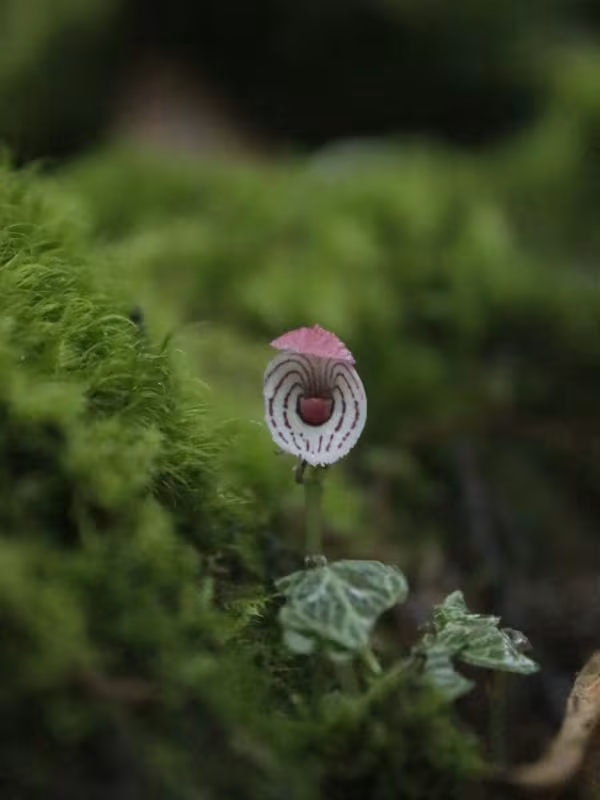
Description
Growing requirements
The Himalayan helmet orchid is a unique member of the Orchidaceae family, native to the damp, shaded environments of the Himalayan mountain range. It is a terrestrial orchid known for its small stature and distinctive, helmet-shaped flower structure.
Botanically, this species is defined by its solitary, heart-shaped leaf that lies flat against the mossy substrate. It acts as a seasonal ephemeral, withdrawing into a subterranean tuber during unfavorable climatic periods to survive harsh environmental shifts.
Successful cultivation requires a high-humidity environment, ideally maintained between 75% and 90%. Maintaining consistent airflow is crucial to prevent moisture-related issues, as stagnant air is highly detrimental to the health of the plant.
The potting medium must be highly porous and moisture-retentive, mimicking the natural leaf litter of Himalayan forests. A blend of chopped sphagnum moss, fine fir bark, and leaf mold provides the best physical structure for root development.
Light requirements are strict: the orchid thrives in dappled shade or indirect light. Direct sunlight must be avoided at all costs, as the delicate tissues of the Himalayan helmet orchid are extremely prone to rapid dehydration and thermal damage.
Main diseases and pests
Fungal and bacterial rots are the most significant threats to Corybas himalaicus in a controlled environment. These pathogens often thrive when the substrate remains overly saturated or when the potting medium becomes too compact to allow proper gas exchange.
Pests such as spider mites and mealybugs can exploit the plant if the air circulation is inadequate or if the humidity drops significantly. Early detection and the use of targeted, non-harsh control methods are vital for maintaining plant health.
Over-fertilization is a common mistake that leads to severe root stress and decline. Because these orchids have a very delicate root system, they require minimal nutrient input, preferably applied through extremely dilute organic fertilizers during the growing season.
Poor water quality, particularly water with high mineral content, causes toxic salt accumulation in the substrate. This salinity inhibits water uptake and can eventually result in the systemic collapse of the root system and the death of the tuber.
Inappropriate dormant care often leads to total crop failure. During the rest phase, the substrate should be kept only marginally moist; excessive water at this stage usually leads to fungal infections that destroy the dormant tuber within a few days.