
Corokia
Corokia hybrids
Description
Growing requirements
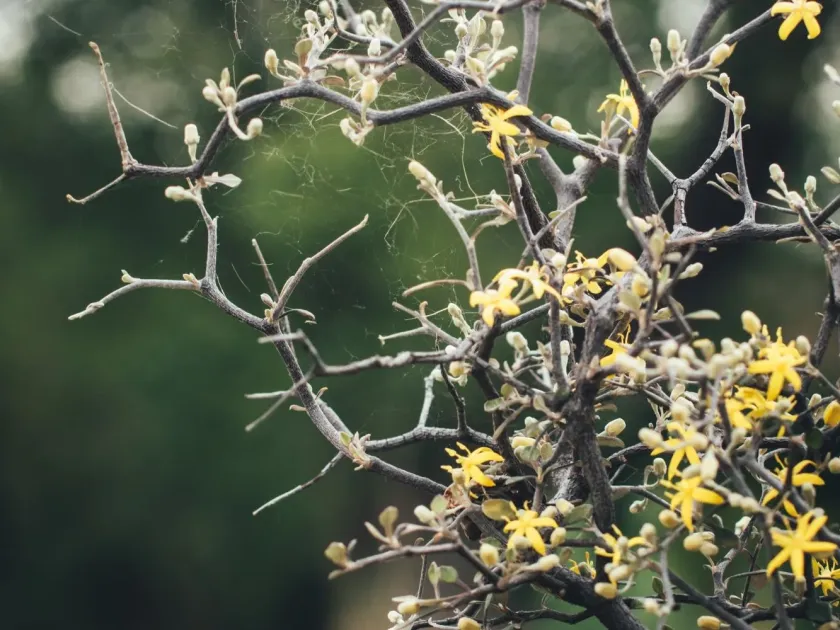
Corokia is a genus of evergreen shrubs belonging to the Argophyllaceae family. Originating from New Zealand, these plants are well-known for their distinct, wiry, and zigzagging branch structure, which gives them a unique architectural appearance.
For optimal growth, Corokia requires well-draining soil. It is highly intolerant of waterlogged conditions, which makes sandy or loamy soils with added organic matter the best choice for container or garden cultivation.
The plant thrives in full sun to partial shade. While it can withstand moderate wind, it is best placed in a sheltered position in cooler climates to protect it from harsh frost, as it is generally hardy only down to about -7°C.
Maintenance involves routine pruning to maintain the desired shape and density. Pruning is best performed after the flowering period to encourage new growth and keep the plant compact, which is vital for its use in landscaping.
The primary use of Corokia is ornamental. Due to its dense, intertwined growth habit, it is an excellent candidate for hedges, topiary, or as a contrasting structural element in mediterranean or coastal-themed garden designs.
Main diseases and pests
Common pests affecting Corokia include spider mites and scale insects. These pests are particularly problematic in dry environments where the plant is kept indoors or in a greenhouse with poor air circulation.
Pathogens like root rot (Phytophthora) can develop if the soil remains excessively damp for long periods. Proper irrigation management is the most effective preventative measure against these fungal issues.