
Wister's coralroot
Corallorhiza wisteriana
Description
Growing requirements
Wister's coralroot is a member of the Orchidaceae family and is recognized for its unique mycoheterotrophic lifestyle. Since it lacks chlorophyll, it is unable to photosynthesize, relying entirely on underground fungal networks to supply its carbon and nutrients.
The plant is native to North America, typically found in moist, shaded woodland habitats. It thrives in soils rich in organic matter where specific mycorrhizal fungi are present to facilitate its growth throughout the different stages of its lifecycle.
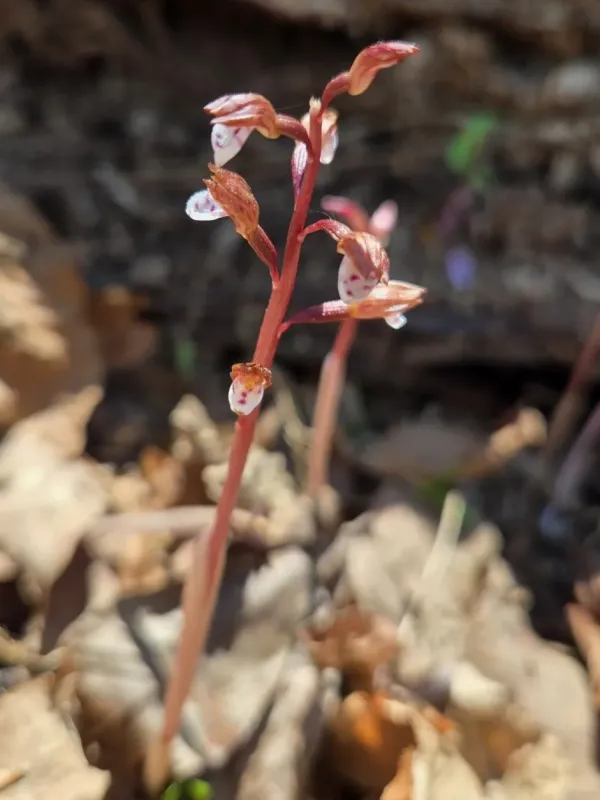
Botanically, the plant is distinguished by its branched, coral-like rhizomes, which lack traditional root hairs. The flowering stalk typically emerges from the leaf litter, bearing small, complex flowers that are adapted to specific insect pollinators.
From an agricultural standpoint, Wister's coralroot is not a crop and cannot be domesticated or farmed using conventional methods. Its survival is strictly tied to the presence of intact, undisturbed forest ecosystems and specific soil microbial communities.
In terms of land use, the species holds no agricultural value but is highly significant for biodiversity conservation. Protection of these rare orchids is essential, as they are sensitive indicators of the health and integrity of their local forest habitats.