
Late coralroot
Corallorhiza odontorhiza
Description
Growing requirements
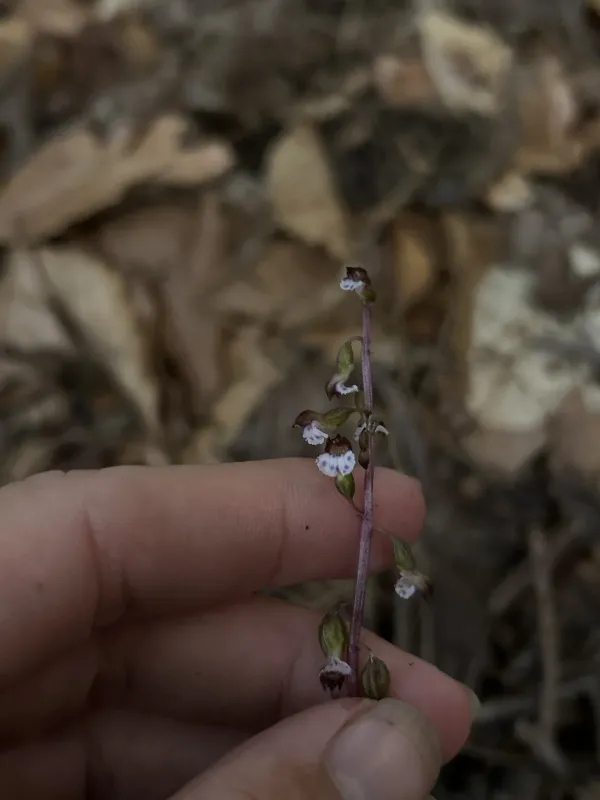
The late coralroot (Corallorhiza odontorhiza) is a fascinating member of the Orchidaceae family. It is a fully myco-heterotrophic plant, meaning it lacks chlorophyll and cannot perform photosynthesis to sustain itself.
This plant relies entirely on a symbiotic relationship with ectomycorrhizal fungi in the soil. It extracts carbon and nutrients from these fungal networks, which allows it to thrive in extremely low-light conditions within deep deciduous forests.
Native to North America, the late coralroot is typically found in mature forest ecosystems with rich, undisturbed leaf litter. These environments provide the necessary biological stability for the fungal hosts it depends on.
The botanical structure is highly reduced. The plant consists of a thin, purple or brownish stem that emerges briefly during the blooming season, while the majority of its life cycle occurs underground through coral-like rhizomes.
Agricultural cultivation of this orchid is currently impossible. Because it lacks the ability to produce energy from sunlight, it cannot be grown in gardens or standard greenhouses without the presence of its specific fungal associates.
Main diseases and pests
Habitat loss represents the most significant threat to the late coralroot. The removal of canopy trees and the subsequent drying of the forest floor destroy the delicate mycelial networks required for the plant's survival.
Soil disturbance caused by logging, construction, or intensive human activity can sever the connections between the orchid and its fungal host, leading to the plant's rapid decline in that area.
Invasive plant species can outcompete native understory vegetation, altering soil nutrient cycling and indirectly harming the specialized fungi that the late coralroot depends on.
Climate change, particularly shifts in precipitation patterns, poses a risk by altering the moisture levels in the forest litter. Without consistent humidity, the fungal networks that the orchid exploits may perish.
Pollution and the acidification of leaf litter due to industrial runoff negatively impact the sensitive symbiosis. As a rare and specialized species, it serves as a sensitive bioindicator of overall forest ecosystem health.