
Pacific coralroot
Corallorhiza mertensiana
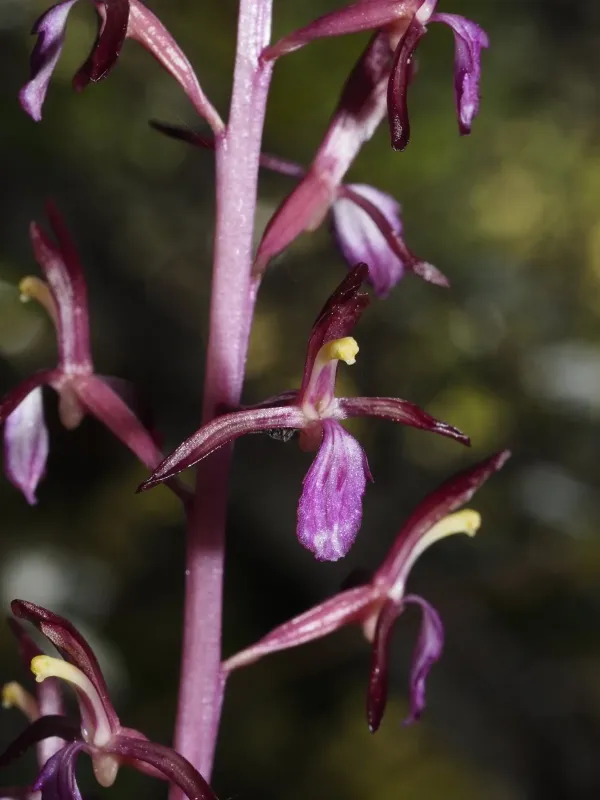
Description
Growing requirements
The Pacific coralroot (Corallorhiza mertensiana) is a myco-heterotrophic perennial plant belonging to the Orchidaceae family. Unlike most agricultural crops, this plant does not photosynthesize in the classical sense, as it lacks chlorophyll and obtains its nutrients through a symbiotic relationship with fungi.
The natural range of this species covers coniferous and mixed forests in the northwestern part of North America, including the Pacific coastal regions. The plant prefers moist, shaded areas with a deep layer of leaf litter, rich in humus and specific mycorrhizal flora.
This species is extremely sensitive to microclimate changes. Normal development requires consistently high air and soil humidity, as well as a specific substrate acidity that supports the activity of fungal symbionts.
Given the absence of photosynthetic tissues, the Pacific coralroot is not suitable for cultivation under traditional agricultural conditions. Its life cycle is entirely dependent on the health of the forest ecosystem and the presence of specific mycorrhizal fungi in the soil profile.
There is no commercial agricultural use for this species. It is of interest solely for scientific research and conservation purposes as a subject for studying the evolutionary biology of orchids and complex ecological relationships in forest biocoenoses.
Main diseases and pests
The main threats to the Pacific coralroot population are forest degradation and the disturbance of the soil surface where the fungal network resides.
Human impact, including logging and excessive soil compaction, leads to the destruction of the root system, which is interconnected with fungal hyphae, rendering the plant non-viable.
Alterations in the forest hydrological regime negatively affect the population, as the plant requires constant moisture levels to sustain its metabolism.
Specific pests or diseases common to agricultural crops have not been identified for this species; however, pathogens affecting forest litter can indirectly limit its growth.
The primary limiting factor for survival is the loss of natural habitat, which necessitates strict monitoring of the ecological status of forest lands in the regions where it grows.