
Corallocarpus epigaeus
Corallocarpus epigaeus
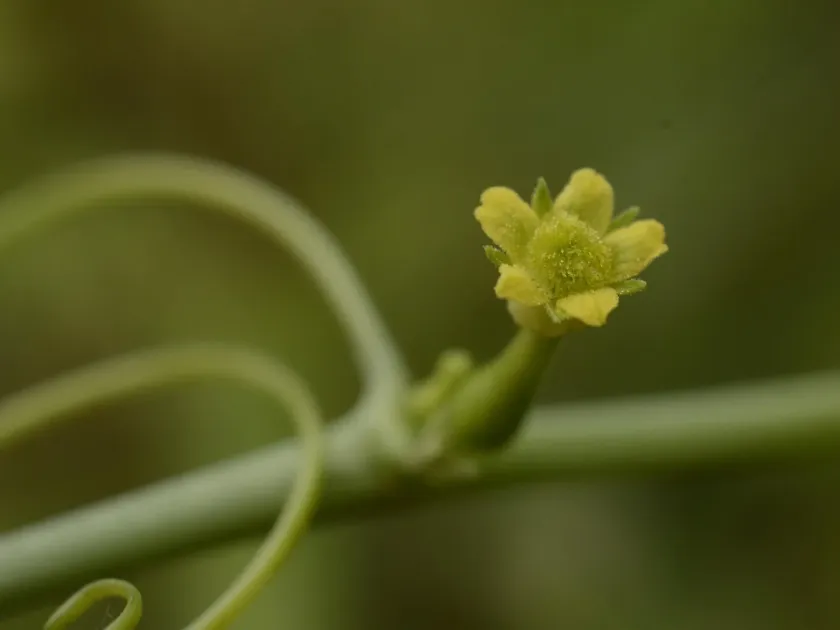
Description
Sowing dates
Sowing of this crop generally aligns with the onset of the monsoon season in its native habitat to ensure sufficient moisture for germination.
In controlled environments, seeds should be sown in a well-draining substrate at temperatures ranging from 25 to 28 degrees Celsius.
The optimal planting depth is between 1 and 2 centimeters, providing a protective barrier against soil crusting while allowing for healthy shoot emergence.
Seedlings typically exhibit uneven germination rates, requiring consistent monitoring of humidity levels throughout the first month of growth.
It is essential to use a porous, sandy soil mix to prevent waterlogging, as seeds are highly sensitive to rot during the early stages of development.
Growing requirements
Corallocarpus epigaeus is a perennial herbaceous plant belonging to the Cucurbitaceae family, characterized by a massive, thickened tuberous root.
The plant is native to arid and semi-arid regions, demanding significant sunlight and soils with excellent drainage to mimic its natural environment.
It thrives in temperature conditions between 25 and 35 degrees Celsius, making it highly suitable for tropical or protected greenhouse cultivation.
During the dormant period, the plant requires very little water, reflecting its evolution to survive long-term drought through its tuberous energy storage.
Soil nutrient levels should be moderate; excessive fertilization can lead to rapid, weak growth that makes the plant more susceptible to diseases.
Main diseases and pests
Root rot, driven by stagnant water and excessive humidity during cooler periods, represents the most significant threat to the crop's survival.
Spider mites are common pests that thrive in the dry conditions required for this plant, often attacking the leaves and reducing photosynthetic efficiency.
Soil-borne pathogens and nematodes can cause severe damage to the tuberous root, impacting the long-term health and yield potential of the crop.
Prevention relies heavily on proper spacing and irrigation management, ensuring that moisture is applied only when the substrate is adequately dry.
In cases of infestation, integrated pest management practices should be employed to protect the tuber quality, which is the primary economic asset.