
Copaifera multijuga
Copaifera multijuga Hayne
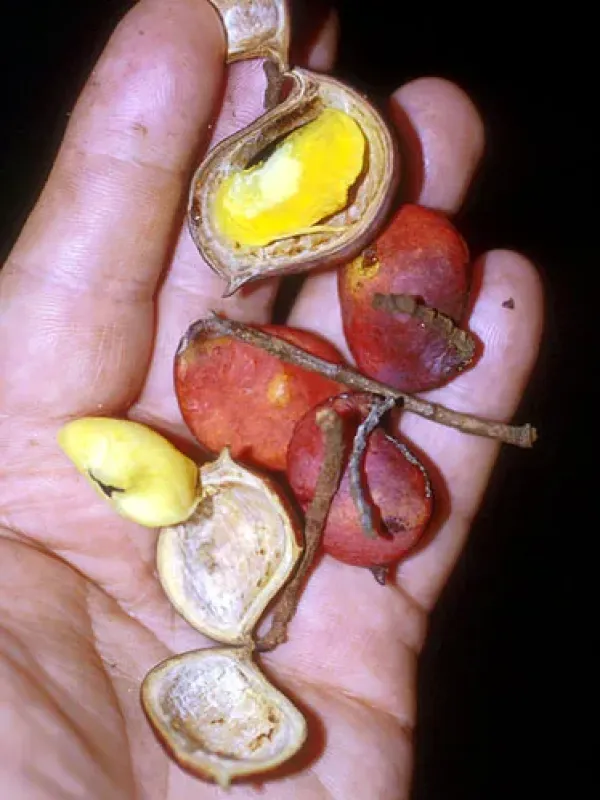
Description
Growing requirements
Copaifera multijuga is a prominent member of the Fabaceae family, native to the lush tropical rainforests of the Amazon basin.
This species requires a stable, high-humidity environment with consistent tropical temperatures, typically ranging from 22 to 30 degrees Celsius throughout the year.
Optimal growth conditions involve deep, well-draining soils rich in organic matter. The tree is intolerant of waterlogged areas and requires excellent soil aeration for its root system.
Consistent rainfall is essential, as the tree lacks mechanisms to withstand prolonged dry seasons in its early developmental stages.
When grown in nurseries, seedlings require controlled shading and consistent irrigation to mimic the conditions of the natural forest understory.
Yield
The primary economic value of Copaifera multijuga lies in its oleoresin, commercially known as copaiba balsam, extracted from the trunk.
Mature trees can produce significant volumes of resin annually. Sustainable harvesting practices involve tapping the tree in a way that allows for natural regeneration.
The extracted balsam is highly sought after for its anti-inflammatory, antiseptic, and fixative properties in the perfume and pharmaceutical sectors.
Beyond resin, the timber is prized for its high density and resistance to decay, making it suitable for high-quality carpentry and construction.
Proper management of the extraction process ensures that the tree continues to provide yield for many years without compromising its long-term health.
Main diseases and pests
Habitat loss due to deforestation remains the most significant threat to the sustainable cultivation of Copaifera multijuga in its native range.
Various wood-boring insects pose a danger, as they penetrate the bark and inner layers, potentially introducing pathogens that weaken the tree.
Fungal pathogens can colonize the tree through improperly sealed tapping wounds, leading to internal decay and reduced resin production.
Over-tapping is a critical human-induced risk that can exhaust the tree's metabolic resources and increase its susceptibility to secondary infections.
Best practices for protection include rotational tapping schedules and the use of sterile tools to minimize the physical trauma inflicted on the tree during harvest.