
Spreading dayflower
Commelina longicaulis
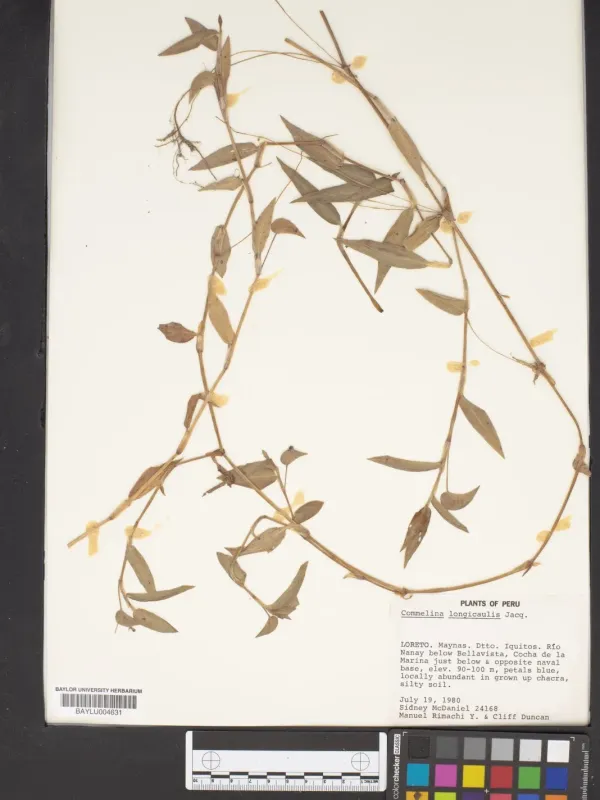
Description
Growing requirements
Spreading dayflower (Commelina longicaulis) is a member of the Commelinaceae family. This perennial herb features creeping, sprawling stems that root at the nodes, allowing it to colonize moist areas effectively and create dense vegetative mats.
Originating from tropical and subtropical areas of the Americas, this plant has adapted to diverse environments. It thrives in humid conditions and is often found in fertile soils, particularly in shaded or semi-shaded areas near water bodies or agricultural fields.
The plant demands high humidity and warm temperatures for optimal growth. It is highly sensitive to frost, which limits its distribution to warmer climates or protected cultivation environments where temperatures remain above freezing.
Soil requirements focus on high moisture retention paired with good drainage. The species is highly responsive to soil nutrients, particularly nitrogen, which promotes rapid expansion and the production of lush green foliage throughout the growing season.
While often categorized as an invasive weed, its nutritional profile in some regions makes it a potential forage source. Cultivation for this purpose requires careful management to ensure the biomass is harvested before the plant becomes overly woody.
Main diseases and pests
The most common threats to the plant are fungal infections, particularly stem rot and leaf spots. These diseases thrive in environments with poor air circulation and excessive standing moisture, especially during prolonged rainy periods.
Pest pressures are primarily caused by gastropods like slugs and snails, which can devastate young populations. Additionally, aphids and various leaf-eating larvae may infest the foliage, reducing both the aesthetic and nutritional quality of the plant.
Disease management strategies emphasize the importance of field sanitation and spacing. By ensuring adequate light penetration and airflow, the risk of fungal proliferation is significantly reduced in commercial patches.
Integrated pest management, including physical barriers for snails and biological controls for aphids, is recommended to minimize chemical reliance. Regular monitoring of the foliage ensures that early signs of damage can be addressed promptly.
Preventing overcrowding is essential for maintaining plant vigor. Properly spaced plants are more resistant to stress and better equipped to recover from minor pest attacks or localized environmental fluctuations.