
Tread-softly
Cnidoscolus stimulosus
Description
Growing requirements
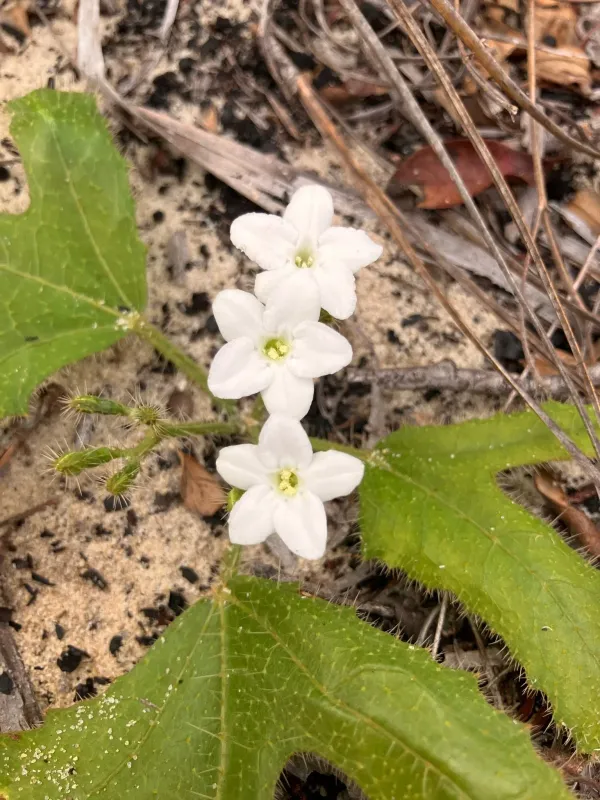
Tread-softly (Cnidoscolus stimulosus) is a member of the Euphorbiaceae family. Native to the southeastern United States, this perennial plant thrives in sandy soils and open, sunny environments, typically found in dry woods and scrublands.
The defining botanical feature of this species is its dense cover of stinging hairs, which act as a formidable defense mechanism. These hairs release chemical irritants upon contact, which can cause significant skin irritation and pain, necessitating extreme caution when handling or weeding.
For successful cultivation, the plant requires well-drained, porous soil to prevent root rot. It is highly drought-tolerant once established but needs adequate sunlight to maintain its structural integrity and reach full maturity in a controlled agricultural setting.
In terms of agricultural utility, while not a commercial staple, it is studied for its chemical compounds and its role as a natural deterrent against herbivores. Its potential uses are limited to research and niche ornamental interest due to its aggressive stinging properties.
Agricultural management requires protective gear, including gloves and long-sleeved clothing. Avoiding skin contact is the primary concern for agronomists, as the sting is notoriously persistent and can cause discomfort for several hours or even days after initial exposure.
Main diseases and pests
Fungal pathogens associated with poor drainage are the primary threats to the plant's health. Waterlogging quickly promotes root decay, which is often irreversible in the sandy soil conditions that this species usually prefers for its survival.
Common agricultural pests like aphids and spider mites can infest the foliage, particularly in greenhouse or protected environments. Management involves targeted control measures that minimize the need for direct contact with the plant's surface.