
Clintonia udensis
Clintonia udensis
Description
Sowing dates
Propagation of Clintonia udensis is typically achieved through seeds or the division of rhizomes. Seeds require a mandatory stratification period of two to three months at low temperatures to break dormancy and ensure uniform germination during the spring.
When sowing, seeds should be placed in a loose, humus-rich substrate at a depth of about 1–2 centimeters. It is crucial to maintain high humidity and consistent moisture levels, as the seeds are sensitive to desiccation and can lose viability quickly if dried out.
Vegetative propagation via rhizome division is most successful when performed in early autumn. The rhizomes should be divided carefully, ensuring each section has healthy roots and dormant buds, then replanted immediately into prepared soil.
Seedlings develop slowly and require careful management during their first year. Providing constant shade and protection from harsh environmental factors is essential for their successful establishment before they can be moved to a permanent location.
When transplanting young plants, maintain a spacing of approximately 30 centimeters. This provides sufficient room for each plant to develop its typical dense foliage rosettes without competing for nutrients or soil moisture.
Growing requirements
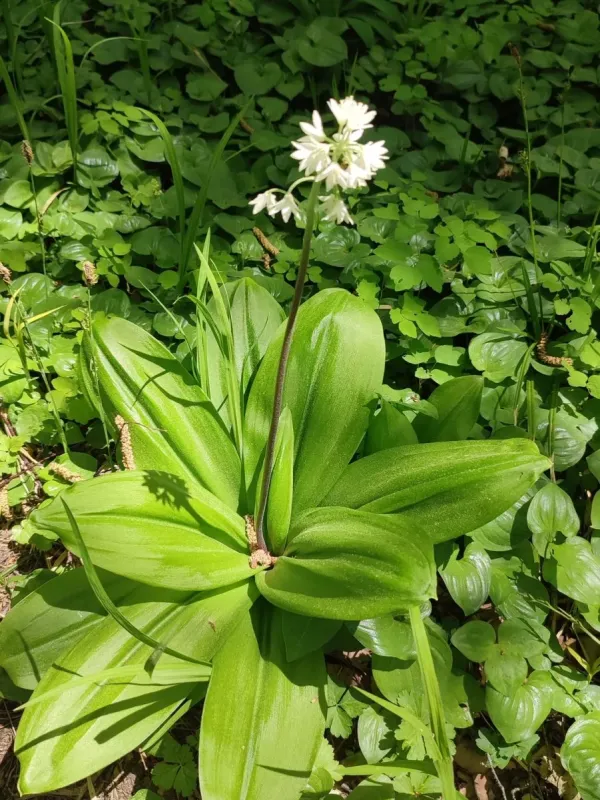
Clintonia udensis, a member of the Liliaceae family, is a perennial herb native to the forest regions of East Asia. It is characterized by a creeping rhizome and large, glossy, basal leaves that form an attractive rosette, making it a desirable plant for shady gardens.
This species thrives in shade or semi-shade conditions, mimicking the environment of its native forest habitat. It is highly suited for planting under the canopy of deciduous trees where it receives dappled light and cool ambient temperatures.
The ideal soil is acidic, light, and rich in organic matter. While the plant requires constant moisture, good drainage is vital to prevent root rot, especially during wet seasons. The addition of peat or leaf mold is recommended to optimize soil quality.
Regarding climate, the plant prefers cool summers and cold winters. It is highly winter-hardy and requires no special protection from frost. However, it does not tolerate high heat or prolonged drought, which can lead to rapid leaf burn and decline.
Maintenance is minimal, focusing mainly on mulching the soil with organic matter such as pine needles or compost. This practice helps to retain essential moisture and maintains the acidic pH levels that are optimal for the health and vitality of the plant.
Main diseases and pests
Clintonia udensis is generally resistant to many common agricultural pests. However, poor drainage can lead to root rot, which is the most significant threat to its survival. Proper soil structure is the best preventative measure against this condition.
Gastropods, such as slugs and snails, may target the broad, succulent leaves during periods of high humidity. Gardeners should monitor the area and implement control methods, such as physical barriers, if damage to the foliage becomes excessive.
Fungal diseases are rare but can occur if the plants are overcrowded or if there is poor air circulation. Thinning out dense patches and ensuring the plants are not overwatered will significantly reduce the risk of any fungal infections.
Sunscald represents a physiological threat to the leaves if the plant is inadvertently exposed to direct sunlight. This often happens if surrounding vegetation is pruned too heavily, highlighting the need for stable shade management.
Overall, keeping the plants healthy through proper site selection and mulching will naturally minimize the impact of pests and diseases, ensuring a long lifespan for these woodland perennials.