
Clintonia andrewsiana
Clintonia andrewsiana
Description
Growing requirements
Clintonia andrewsiana, commonly known as Andrew's clintonia, is a perennial herb belonging to the Liliaceae family. It is native to the coastal forests of California and Oregon, where it thrives in moist, cool understory environments.
For successful cultivation, the plant requires rich, acidic, and well-draining soil. It is essential to maintain consistent soil moisture, as the plant does not tolerate dry conditions, but excessive waterlogging must be avoided to prevent root decay.
This species is highly shade-tolerant, making it an excellent choice for woodland gardens. Direct sunlight should be avoided as it can cause significant stress, leaf chlorosis, and dehydration, which drastically reduce the plant's ornamental value.
Clintonia andrewsiana prefers cool temperate climates with mild summers. When planting, it is recommended to provide a thick layer of organic mulch to keep the soil temperature stable and retain moisture throughout the growing season.
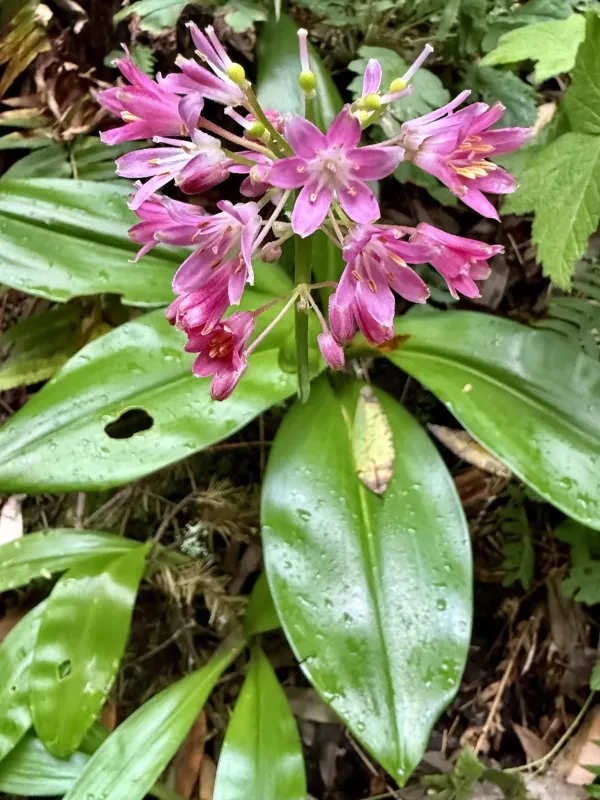
Botanically, the plant is distinguished by large basal leaves and tall inflorescences carrying clusters of pinkish-purple bell-shaped flowers. The subsequent development of striking blue berries adds further seasonal interest to the planting site.
Main diseases and pests
Slugs and snails are the most significant pests for Clintonia andrewsiana, especially in humid forest settings. Regular monitoring and the application of physical or biological barriers are necessary to prevent defoliation.
Root rot is a common threat caused by poor drainage or overwatering. Maintaining a well-drained substrate and ensuring air circulation around the base of the plant are critical steps for long-term health and disease prevention.
Fungal diseases, including leaf spots, can occur if the humidity remains too high without adequate airflow. Pruning affected leaves and applying suitable fungicidal treatments can help mitigate the spread of these pathogens.
In drier periods, spider mites can potentially infest the foliage, particularly if the plant is under water stress. Ensuring regular deep watering helps maintain plant vigor and increases resistance to such infestations.
Additionally, small mammals like voles may target the rhizomes, especially during winter months when food sources are scarce. Protecting the planting area with wire mesh or repellents is advised in regions where these pests are prevalent.