
Bluebead lily
Clintonia borealis
Description
Growing requirements
The bluebead lily (Clintonia borealis) is a perennial herb belonging to the Liliaceae family. Native to the cool, moist forests of North America, this plant is well-adapted to shaded, woodland environments where organic matter accumulates on the forest floor.
The primary requirement for successful growth is a highly acidic, moist, and humus-rich soil. It thrives in environments that mimic its natural habitat, requiring soil that retains moisture but allows for excellent drainage to prevent the roots from rotting.
Regarding climate, the plant requires cool temperatures and protection from harsh, direct sunlight. It is classified as an understory plant, making it ideal for shaded garden beds that do not experience extreme heat waves during the summer season.
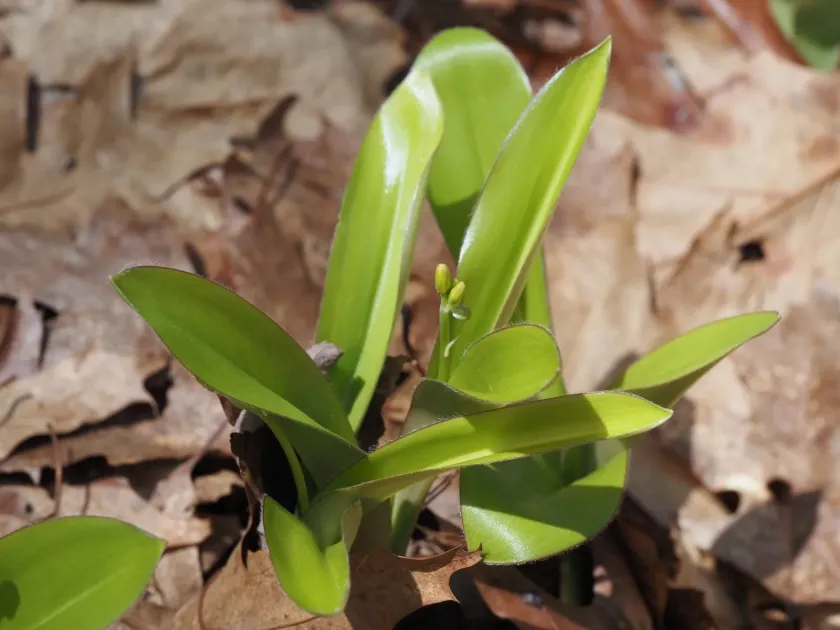
Botanically, it features a basal rosette of broad, glossy leaves and a sturdy scape that produces clusters of drooping, greenish-yellow bell-shaped flowers. The plant is distinct for its glossy, electric-blue berries, which develop after flowering and provide significant visual interest.
In terms of хозяйственное use, the bluebead lily is primarily cultivated for its ornamental properties. It is a favored choice for woodland gardens and landscape designs that emphasize native species and low-maintenance, shade-tolerant vegetation.
Main diseases and pests
Bluebead lily is generally robust, but it can be susceptible to root rot if the soil conditions are poor. Specifically, soil that stays too wet without proper airflow will encourage fungal pathogens that attack the rhizome system.
Gastropods, including slugs and snails, are the most significant pests for this species. They are attracted to the succulent foliage, often causing significant tissue loss and leaving the leaves ragged, which reduces the plant's overall aesthetic value.
Nutrient deficiency, particularly manifesting as leaf chlorosis, can occur if the soil pH shifts away from the acidic range required by the species. Maintaining the correct soil chemistry is essential to ensure the plant can efficiently absorb the nutrients it needs to remain healthy.
To mitigate the risk of pest damage, gardeners often use barriers such as crushed eggshells or copper tape around the plant base. Frequent observation is necessary to identify early signs of mollusk activity before significant damage occurs.
Proper garden sanitation is crucial to prevent fungal infections. Removing decaying debris and ensuring that the planting site has sufficient air circulation will help keep the foliage dry and reduce the likelihood of moisture-dependent pathogens taking hold.