
Cladanthus arabicus
Cladanthus arabicus
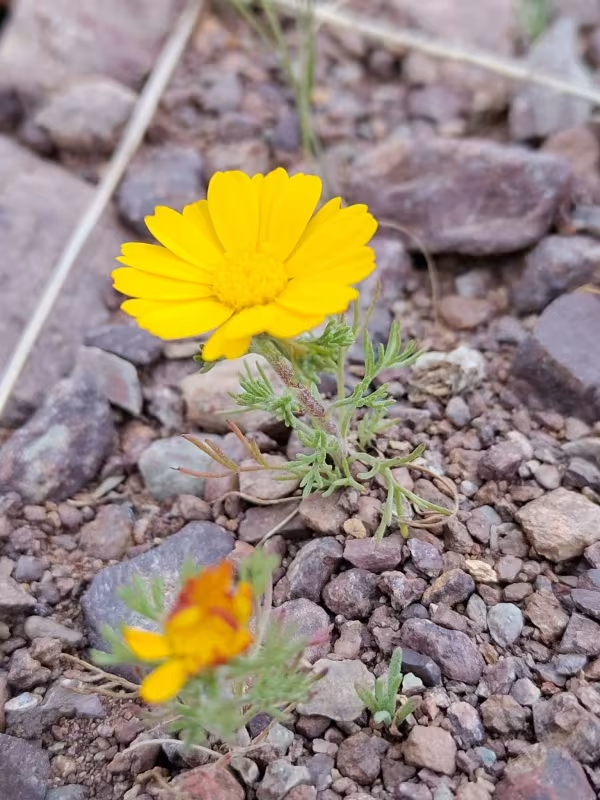
Description
Sowing dates
Cladanthus arabicus, often referred to as the Moroccan daisy, is an attractive annual belonging to the Asteraceae family. It is typically propagated by seeds sown directly into open soil once the danger of frost has passed in the spring.
To extend the flowering season, gardeners often start seeds indoors in late winter or early spring. Using a well-draining seed-starting mix ensures optimal germination rates when kept at a stable temperature of 18–22 degrees Celsius.
Transplanting into the garden should occur when the seedlings are robust enough to handle the change in environment. Spacing the plants 20 to 30 centimeters apart is essential to allow for healthy airflow and side-branching.
The site selection for sowing must prioritize areas with loose, aerated soil. Seeds should be lightly covered with soil to ensure they remain moist but receive enough light to stimulate the initial growth phase.
Providing consistent moisture during the early stages of seedling development is critical. Once established, the root system becomes more resilient, but initial hydration is key to achieving a uniform and high-density crop stand.
Growing requirements
The plant thrives in full sun exposure. It is a heliophilous species that requires at least 6–8 hours of direct sunlight daily to maintain its characteristic compact, mound-like growth habit and vibrant yellow flowers.
Soil requirements are relatively modest; however, Cladanthus arabicus excels in well-drained, sandy-loam soils. It struggles significantly in heavy clay soils that retain excess moisture, which can lead to root system decay.
This crop displays notable drought tolerance, making it suitable for areas where summer precipitation is low. Despite this, supplemental watering during prolonged heat waves will maintain floral output and prevents early senescence.
Fertility management should be moderate. Over-fertilization, especially with nitrogen, tends to favor vegetative growth over flower production. A balanced, low-nitrogen liquid fertilizer applied once a month is usually sufficient.
Wind protection is an often overlooked requirement for this species. While it is sturdy, high-speed winds can damage the thin, branching stems, so planting in areas sheltered by hedges or other structures is beneficial.
Main diseases and pests
Pathogen risks are primarily linked to water management. Root rot and fungal damping-off are the most frequent diseases, especially when the soil remains waterlogged or the humidity levels remain excessively high for extended periods.
Insect pests, specifically aphids and spider mites, are common during the peak growing season. These pests typically cluster on the tender tips of the plants, causing distorted leaf growth and reduced flower quality.
Effective pest management involves early detection and the use of targeted horticultural oils or insecticidal soaps. Maintaining clean cultivation practices reduces the availability of overwintering sites for these pests.
Virus infections transmitted by sucking insects can also occur, leading to stunted growth. Removing and destroying any infected plant material immediately helps prevent the spread of these viral pathogens to healthy specimens.
Good cultural practices, such as ensuring proper spacing and removing debris from the base of the plant, remain the most effective methods to mitigate the risk of disease and ensure healthy plant development.