
Chloraea magellanica
Chloraea magellanica
Description
Growing requirements
Chloraea magellanica is a species of terrestrial orchid belonging to the Orchidaceae family. It is native to the southern regions of South America, specifically inhabiting areas of Chile and Argentina, including the harsh environmental conditions of Patagonia.
The plant thrives in cool, temperate climates where humidity remains relatively stable. It naturally populates open meadows, forest fringes, and grassy slopes, which indicates a preference for good light exposure combined with reliable atmospheric moisture.
Successful cultivation requires soil that is loose, well-drained, and slightly acidic. Because of the nature of its root system, the soil must prevent water stagnation to avoid root rot, which is a common challenge for many terrestrial orchids found in these regions.
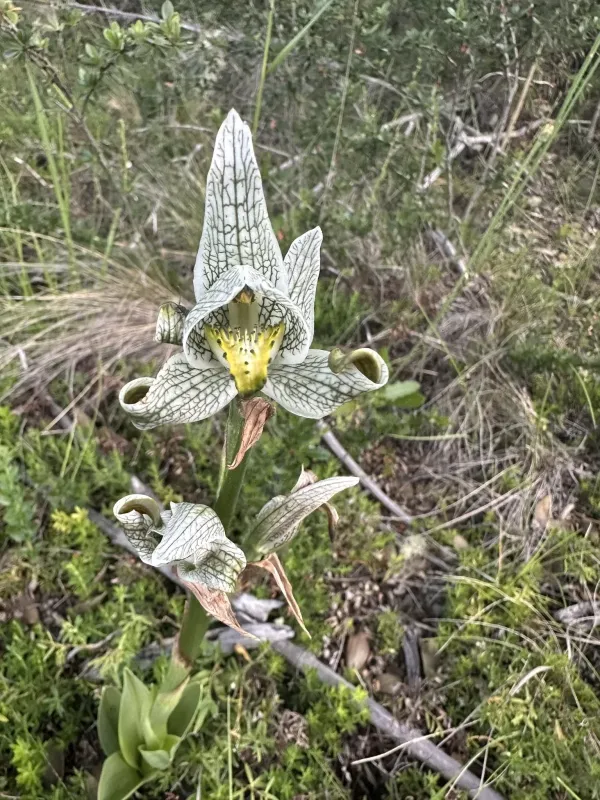
Botanically, Chloraea magellanica displays a basal rosette of leaves and a robust inflorescence that supports several blooms. The flowers are typically white with distinctive dark venation, which serves as a protective or pollinator-attracting mechanism in their natural habitat.
In terms of agricultural or economic use, Chloraea magellanica is not a commercial crop in the traditional sense. It is highly valued in botanical research and conservation programs, serving as an important part of the Patagonian ecosystem and rare species preservation efforts.