
Chisocheton pentandrus
Chisocheton pentandrus
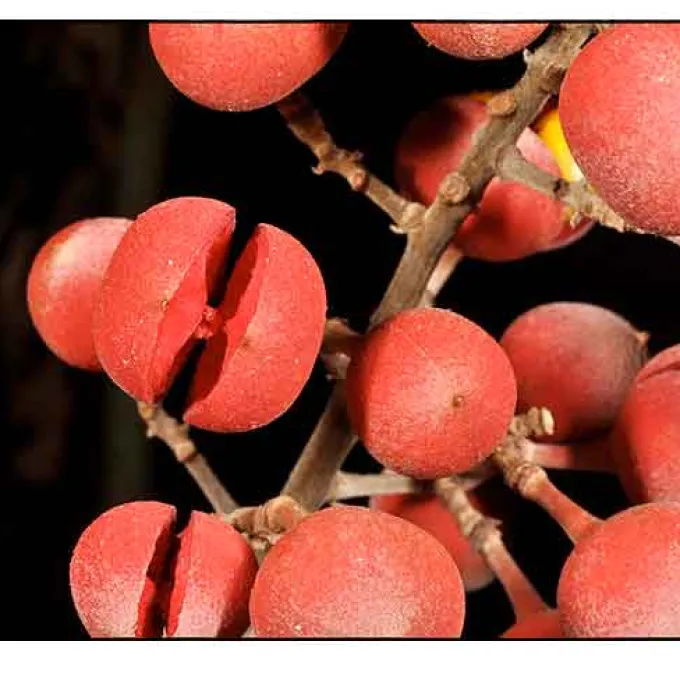
Description
Growing requirements
Chisocheton pentandrus is a significant woody species belonging to the Meliaceae family, native to the tropical rainforests of Southeast Asia. It is recognized for its ecological importance within its natural habitat, thriving in diverse forest strata.
The cultivation of this species requires a tropical climate characterized by constant warmth and high annual rainfall. It performs best in nutrient-rich, well-draining soils that mimic the conditions of a forest floor with abundant leaf litter and organic material.
Geographically, its distribution spans across Indonesia, Malaysia, and the Philippines. As an understory to canopy species, it exhibits a high tolerance for varying light intensities, which is a crucial trait for its survival in competitive forest environments.
The morphology of the tree is marked by pinnate leaves and small, distinct flowers that possess five stamens, which defines its specific epithet. This structural detail is essential for identification and distinguishes it from other closely related species within the genus.
Economically, the species is valued for its wood, which is utilized in local construction, and for its potential in medicinal applications. Research into its chemical compounds suggests that the plant contains secondary metabolites with promising therapeutic properties.