
Chasmanthe
Chasmanthe hybrids
Description
Growing requirements
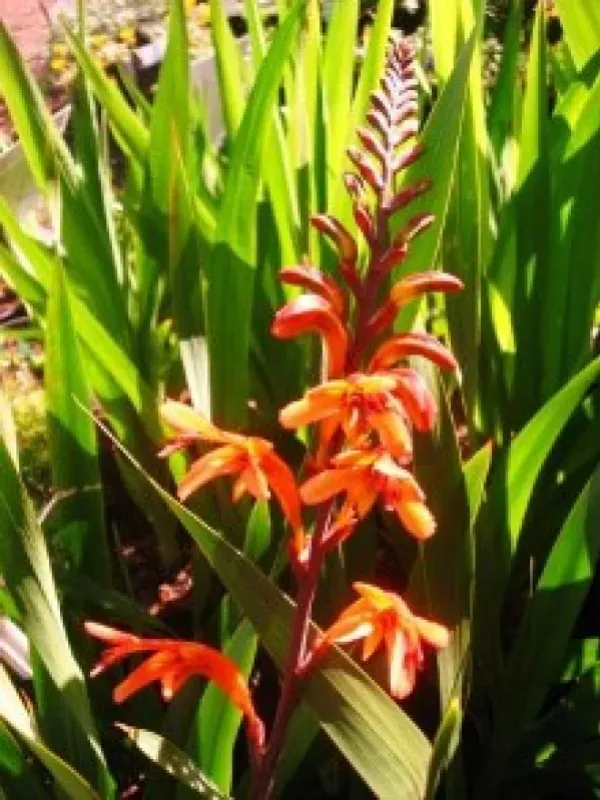
Chasmanthe is a perennial bulbous plant belonging to the Iridaceae family, native to South Africa. These plants are widely appreciated for their vibrant, tubular flowers which bloom in spectacular spikes of orange or red. Due to their architectural shape and brilliant colors, they serve as excellent ornamental specimens in garden landscapes.
The culture requires well-draining, nutrient-rich soil to thrive. Heavy clay soils are generally unsuitable unless amended with organic matter or grit to ensure proper drainage, as excessive moisture can lead to bulb rot. A neutral to slightly acidic pH is ideal for the successful growth of the corms.
Climate preferences for Chasmanthe are characterized by a need for warmth and bright, indirect to direct sunlight. While they are hardy in milder subtropical climates, they are sensitive to frost in colder regions and require protection or lifting of bulbs during winter months. Maintaining an ambient temperature of +20°C to +25°C supports vigorous growth.
Agronomic practices focus on balanced watering during the growing season and periodic fertilization with phosphorus-rich nutrients to encourage better flowering. It is essential to avoid waterlogging the soil during the plant's dormant period, as the bulbs enter a state of metabolic rest and require dry conditions to survive until spring.
The propagation of Chasmanthe is typically achieved through the division of offset corms. This is usually performed during the dormant season. The daughter bulbs should be separated from the main corm and replanted in fresh soil, ensuring each has sufficient space for root development and adequate access to soil nutrients.
Main diseases and pests
Chasmanthe is susceptible to several fungal diseases, primarily triggered by poor soil aeration and excessive irrigation. Root and bulb rots are the most common issues that can result in total plant loss. Preventive measures include using high-quality potting mixes and ensuring that the planting site has an efficient drainage system.
Pest attacks are frequently driven by aphids and spider mites, which can cause significant stress to the plant during the peak of summer. Regular monitoring of the foliage is recommended to catch infestations early. If needed, the application of horticultural soaps or systemic insecticides is effective in managing these pest populations.