
Thyme-leaf sandmat
Chamaesyce serpyllifolia
Description
Growing requirements
Thyme-leaf sandmat (Chamaesyce serpyllifolia) is a member of the Euphorbiaceae family. It is an annual plant species often regarded as a common weed in agricultural fields and disturbed habitats.
Originating from North America, this species has successfully colonized diverse environments worldwide. It thrives in various soil types, particularly sandy and dry substrates where competition from taller plants is limited.
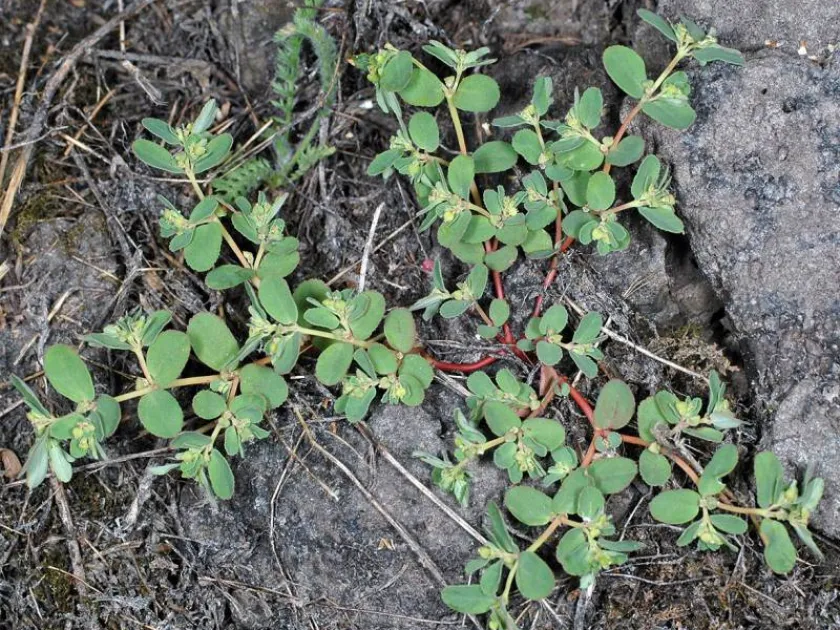
Botanically, it is a prostrate herb with small, opposite leaves that resemble thyme leaves, hence its common name. The plant is distinguished by its milky latex, which serves as a primary defense mechanism against herbivory.
The plant demonstrates a strong preference for full sun exposure and warm temperatures. It is highly drought-tolerant, which gives it a significant competitive advantage in arid or semi-arid farming conditions during the summer months.
Agronomic management relies on precise tillage operations and the application of herbicides aimed at broad-leaved weed control to suppress its growth and prevent the seed bank from expanding.
Main diseases and pests
This plant is rarely targeted by significant pests due to the toxic nature of its latex, which serves as a natural deterrent to most insects and small herbivores.
The main threat posed by this species to agriculture is its status as a reservoir for viruses that can be transmitted by vectors like aphids to valuable food crops.
Lack of specialized natural enemies makes biological control difficult, meaning farmers must rely on mechanical and chemical interventions.
The resilience of the species makes it difficult to eradicate completely once established, as it can recover from minor soil disturbances.
Strategic timing of field operations is crucial; preventing flowering is the most effective way to manage the population density within an integrated pest management program.