
Eyebane
Chamaesyce preslii
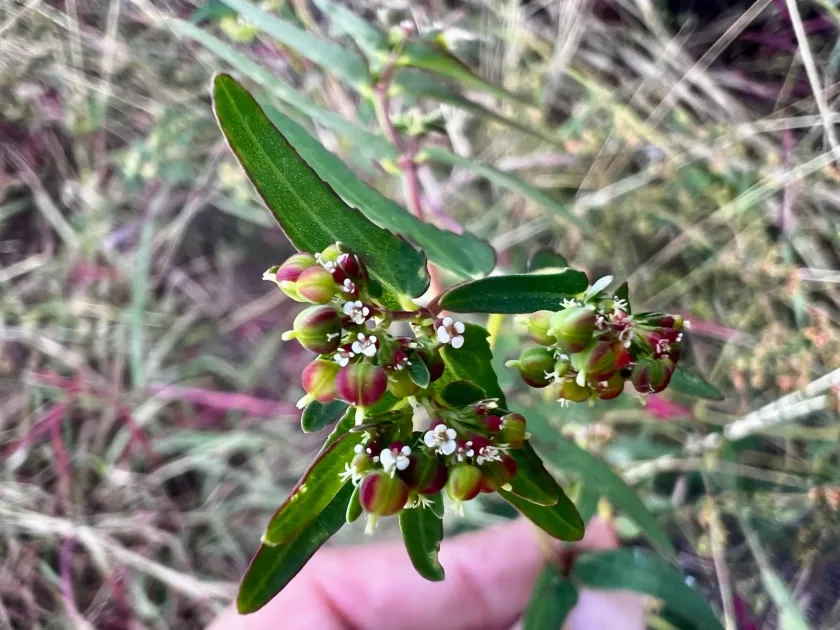
Description
Growing requirements
Eyebane (Chamaesyce preslii, often classified as Euphorbia nutans) belongs to the Euphorbiaceae family. It is an annual herbaceous weed commonly found in agricultural landscapes, known for its ability to quickly colonize disturbed soils and crop fields.
The plant originates from North America and has spread globally due to its high adaptability to varying climatic conditions. It thrives in open, sunny environments with well-drained soil, making it a persistent competitor for resources against standard field crops.
Botanically, Eyebane is recognized by its branched, often reddish stems that exude a milky white latex when damaged. The leaves are opposite and simple, frequently displaying a characteristic reddish spot near the base, which assists in its field identification.
There is no significant commercial use for Eyebane in modern agriculture. Its milky latex is known to be toxic, making the plant undesirable in grazing lands or as a contaminant in hay production, as it can cause irritation or digestive issues in livestock if ingested in large quantities.
Effective management of this weed involves integrated cultural practices. Early-season cultivation and the use of competitive crop cover are essential to suppress its establishment, as the plant can produce a significant amount of seeds within a single growing season.
Main diseases and pests
Eyebane is often associated with the transmission of various fungal diseases to economically important crops. It can serve as an alternative host for rusts and other pathogens that threaten agricultural yields if not monitored properly.
Control measures are predominantly focused on preventing seed bank accumulation. While herbicides are effective, growers are encouraged to use them in rotation to avoid the development of resistance, which is becoming an increasing concern for this specific species.