
Chaetomorpha aerea
Chaetomorpha aerea
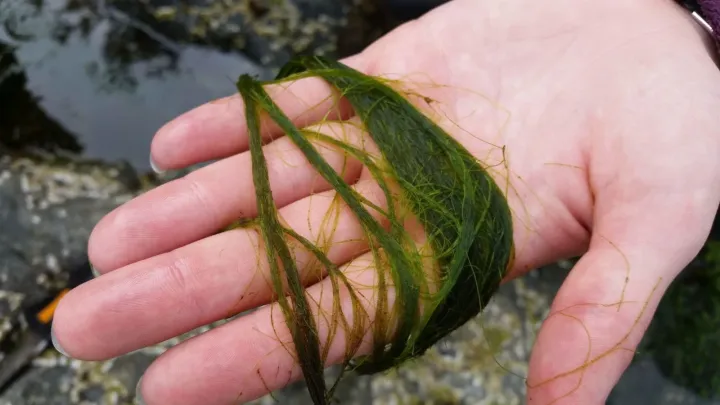
Description
Sowing dates
Chaetomorpha aerea is a filamentous green alga that is not seeded in the traditional agricultural sense. Instead, initial culture establishment involves inoculating the substrate with fragments of live thallus.
The optimal time for establishing new cultures is during periods of high biological activity, ensuring consistent and adequate lighting. In controlled closed-loop systems, year-round production is entirely feasible.
Propagation occurs vegetatively through filament fragmentation. Each small section of the alga is capable of independent growth and further division, making the process highly scalable with sufficient space.
To accelerate colonization, practitioners often secure clumps of algae onto mesh grids or specialized carriers. This ensures uniform distribution of biomass throughout the culture system.
Growth intensity is directly tied to the frequency of fragmentation. Regular maintenance and redistribution of the filaments prevent clumping, which can otherwise lead to the death of the lower layers.
Growing requirements
As a member of the Cladophoraceae family, this crop requires specific environmental conditions. Foremost among these is moderate to high light intensity, which is essential for effective photosynthesis.
Chaetomorpha aerea is highly sensitive to water chemistry. To ensure optimal growth, one must maintain stable levels of nitrates and phosphates, which serve as the primary nutrients for the alga.
The ideal temperature range for this species is between 20 and 26 degrees Celsius. Deviations from this range can lead to either metabolic stagnation or rapid necrosis of the filaments.
A crucial requirement is maintaining constant water movement around the thalli. Laminar or moderate turbulent flow prevents detritus accumulation and ensures nutrient access for all filaments.
Stable salinity is also vital, typically maintained at standard marine levels (around 33–35 ppt). Fluctuation in salinity can compromise the integrity of the algal cell walls.
Yield
The primary use of Chaetomorpha aerea is as a bio-filter in marine aquaria and industrial aquaculture facilities. It is highly effective at exporting excess organic compounds from the water.
Biomass production increases exponentially under proper lighting and nutrient regimes. Yield is determined by the frequency and volume of biomass harvesting from the system.
Commercially, it is utilized for creating feed supplements or as a natural bioremediation tool for wastewater treatment. It possesses a high capacity for processing organic loads.
Harvesting involves the mechanical removal of a portion of the colony. This practice not only provides usable biomass but also stimulates the vigorous regrowth of the remaining population.
Constant monitoring of growth rates is necessary to maintain ecological balance. Over-accumulation can lead to nutrient depletion, subsequently triggering a collapse of the entire culture.
Main diseases and pests
The greatest threat to this crop is infestation by filamentous cyanobacteria, which compete for light and nutrients. These pests can rapidly overtake and displace the desired algal culture.
Pests include various small crustaceans and snails that graze on the delicate tissues. Uncontrolled populations of these organisms can destroy significant portions of the crop.
Diseases are manifested by the discoloration of filaments, signaling nutrient deficiencies or light stress. Sudden shifts in water parameters are also a common cause of health decline.
The accumulation of debris within dense clumps creates anaerobic zones. These areas become hotbeds for rot, causing the structural integrity of the alga to fail rapidly.
Prevention relies on strict hygiene. Periodic rinsing of the filaments in clean water and active pest monitoring are essential for maintaining the health and productivity of the crop.