
Ceropegia gikyi
Ceropegia gikyi
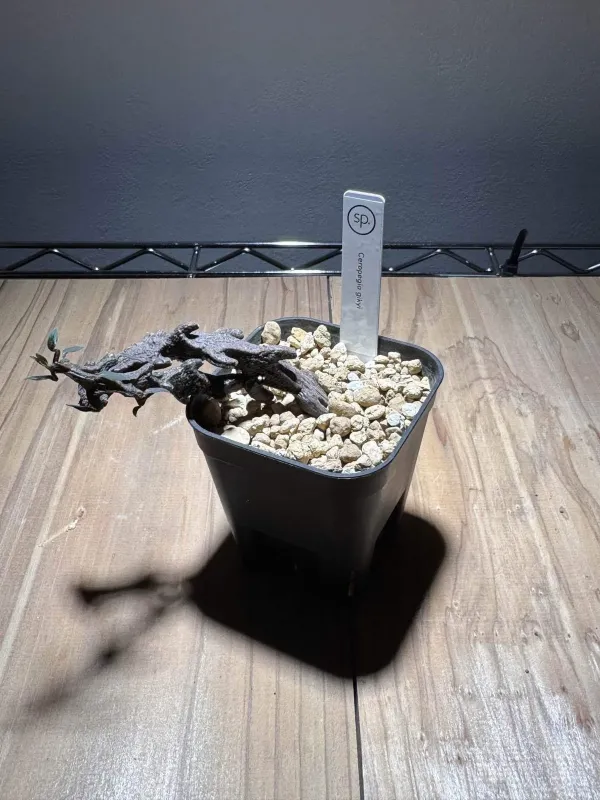
Description
Growing requirements
Ceropegia gikyi is a fascinating plant species belonging to the Apocynaceae family. Native to the rugged, arid regions of Africa, this succulent has evolved to thrive in specialized environments where water conservation is essential for survival.
The botanical structure of the plant features specialized succulent stems that function as reservoirs for moisture. These stems are often cylindrical or slightly swollen, allowing the plant to sustain itself during extended periods of drought in its natural habitat.
Proper cultivation of this species requires a well-draining substrate to prevent waterlogging. A blend comprising sandy loam, perlite, and coarse volcanic rock is ideal for maintaining the necessary soil aeration and drainage parameters.
Regarding light, Ceropegia gikyi prefers bright, indirect sunlight. Excessive exposure to direct heat can be detrimental, potentially causing bleaching or tissue damage, while insufficient light may result in etiolation of the stems.
Temperature management is critical for the success of this crop. Ideally, the plant should be kept within a temperate range, avoiding temperatures below 15 degrees Celsius during the winter dormancy period to ensure long-term health.
Main diseases and pests
The primary threats to Ceropegia gikyi include fungal infections resulting from overwatering. If the substrate remains damp for too long, the plant's delicate root system quickly becomes susceptible to rot, which can prove fatal.
Insect pests such as mealybugs represent a significant nuisance. These insects tend to cluster in the crevices between stems, making manual removal or the application of systemic pesticides necessary for effective control.
Spider mites can also cause significant damage, especially in environments where the air is dry and warm for extended periods. These mites feed on cell sap, leading to stunted growth and discolored stem tissue.
Maintaining proper hygiene by cleaning foliage and using sterilized tools for any pruning operations can help significantly reduce the risk of introducing pathogens into the growing area.
Early identification of signs such as stem softening or yellowing is essential for prompt intervention, preventing the spread of diseases and ensuring the continued vigor of the succulent collection.