
Ceratostigma griffithii
Ceratostigma griffithii C. B. Clarke
Description
Growing requirements
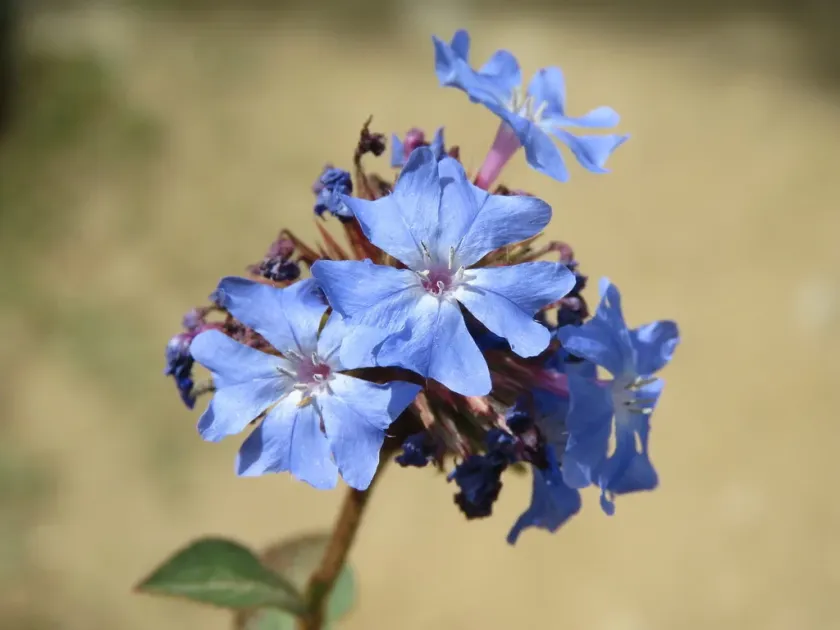
Ceratostigma griffithii is a distinctive perennial subshrub belonging to the Plumbaginaceae family. Known for its brilliant blue flowers, it serves as an excellent groundcover or border plant in professional landscaping.
Originating from the mountainous regions of the Himalayas and Tibet, this species is well-adapted to cooler alpine conditions but requires significant solar exposure to thrive and produce its signature color display.
The crop demands soil with excellent drainage properties. While it is adaptable to various soil types, it performs best in loam or sandy soils and will decline rapidly if planted in stagnant, waterlogged areas.
In terms of climate requirements, this plant exhibits moderate frost tolerance. During winter months, it is advisable to apply a layer of organic mulch around the base to protect the root system from extreme cold and temperature fluctuations.
The maintenance routine includes consistent watering during the growing season and periodic pruning in early spring to remove dead wood and encourage vigorous new growth that will flower later in the season.
Main diseases and pests
Ceratostigma griffithii is generally robust; however, it remains susceptible to physiological disorders if environmental conditions deviate from its natural requirements, particularly regarding soil aeration.
The most significant threat is root rot caused by fungi such as Phytophthora, which thrive in poorly drained soils. Prevention involves careful site selection and ensuring soil porosity before planting.
Pests like aphids can infest the tender shoots during the flowering period, which can distort leaves and reduce the aesthetic quality of the blooms. Prompt identification and localized treatment are recommended.
In hot and dry summers, spider mites may become problematic. High humidity and proper irrigation practices act as natural deterrents against these pests throughout the growing cycle.
Overall crop health is best maintained by ensuring adequate spacing between plants to facilitate airflow, which significantly reduces the risk of foliar fungal infections during wet seasons.