
Water sprite
Ceratopteris thalictroides
Description
Growing requirements
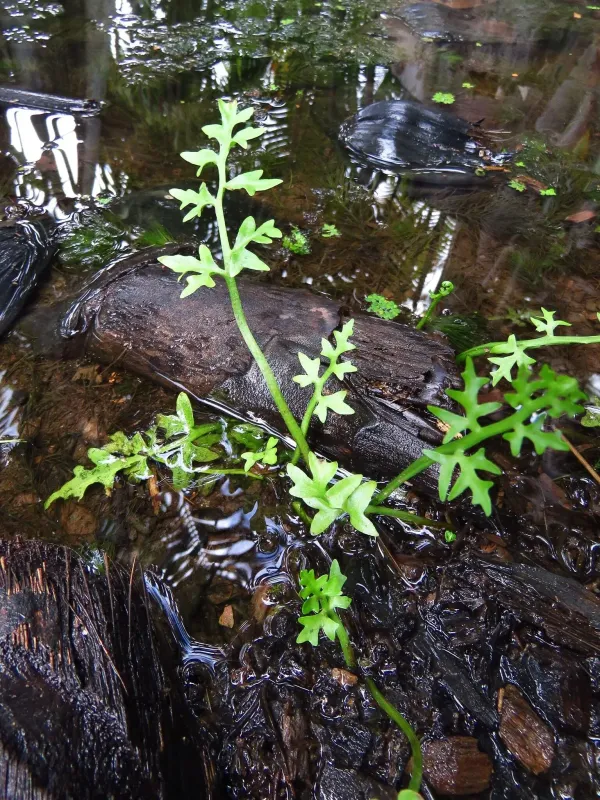
Ceratopteris thalictroides, commonly known as Water sprite, belongs to the Pteridaceae family. It is a cosmopolitan tropical fern widely distributed across Asia, Africa, and Australia, often found growing in shallow flooded environments and agricultural wetland fields.
This species is highly temperature-sensitive, requiring constant thermal conditions between 22 and 28 degrees Celsius. Sustained cold spells can lead to decay and severe physiological stress, which significantly disrupts the production cycle of the plant.
Optimal growth is achieved in nutrient-rich water environments with strong lighting. The plant utilizes both its root system and specialized leaf surface cells to absorb nutrients, making it highly efficient in hydroponic and aquaponic cultivation systems.
Water chemistry requirements include a pH range of 6.0 to 7.5. Although it adapts well to different water hardness levels, maintaining consistent soft to moderate water conditions promotes healthier, more robust foliage development.
Regular fertilization containing essential microelements, specifically iron and manganese, is necessary for maintaining vibrant green coloration. Proper gas exchange must be maintained to ensure the plant receives adequate levels of carbon dioxide for photosynthesis.
Yield
The yield of this crop is measured by its rapid vegetative propagation rate. In professional nurseries, mature leaves frequently develop adventitious plantlets that can be harvested and transferred to individual grow-out containers.
Water sprite is highly valued in the ornamental plant industry for its rapid biomass production. Under optimal conditions, a single mother plant can produce a significant quantity of daughter plants within just a few weeks of active growth.
Main diseases and pests
Pathogenic fungi are the primary threat, often triggered by poor water circulation or high levels of dissolved organic carbon. Regular cleaning of the growing area and removal of decaying plant matter are essential preventative measures.
Invertebrate pests, such as snails or crustacean larvae, can cause significant damage to the delicate leaf tissue. Integrated pest management practices, including biological controls, are preferred over synthetic pesticides due to the plant's sensitivity to chemical compounds.