
Centropodia forsskalii
Centropodia forsskalii
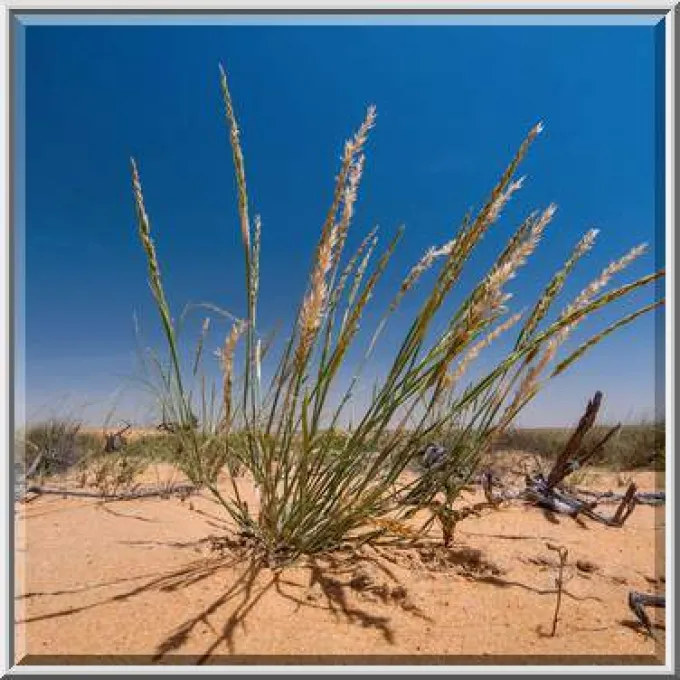
Description
Growing requirements
Centropodia forsskalii is a perennial grass species belonging to the Poaceae family, specifically adapted to thrive in the harshest desert environments of North Africa and the Middle East. It is a key plant for ecological stability in sandy regions.
The plant exhibits remarkable morphological adaptations, such as deep-reaching root systems and pubescent leaves designed to minimize water loss. These features allow it to withstand prolonged periods of extreme heat and severe water scarcity.
Centropodia forsskalii is primarily found in arid zones, including sandy deserts and dunes. It is highly valued for its ability to stabilize shifting sands, effectively acting as a natural barrier against desertification.
In terms of agricultural requirements, this plant demands well-drained, sandy soil and full exposure to sunlight. It is intolerant of waterlogged conditions and prefers substrates with excellent aeration to support its extensive root system.
Its primary agricultural utility is as a fodder source for camels, sheep, and goats in nomadic pastoral systems, providing essential nutrients where more sensitive forage crops cannot survive.
Main diseases and pests
Overgrazing remains the most significant threat to the sustainability of this species, as excessive consumption prevents the plant from regenerating effectively during the growing season.
While the grass is naturally resistant to many common pests due to its tough, fibrous leaf structure, it can occasionally be impacted by generalist insects under extreme stress.
Pathogenic fungi are rarely a major concern, as the arid climate naturally suppresses the development of most plant diseases that typically affect grasses.
Soil erosion caused by high-velocity wind events is a continuous risk, as it can expose root systems and lead to plant desiccation or complete uprooting.
Anthropogenic disturbance and illegal harvesting for fuel or other domestic purposes can significantly reduce the resilience of local Centropodia stands.