
Caulerpa taxifolia
Caulerpa taxifolia
Description
Growing requirements
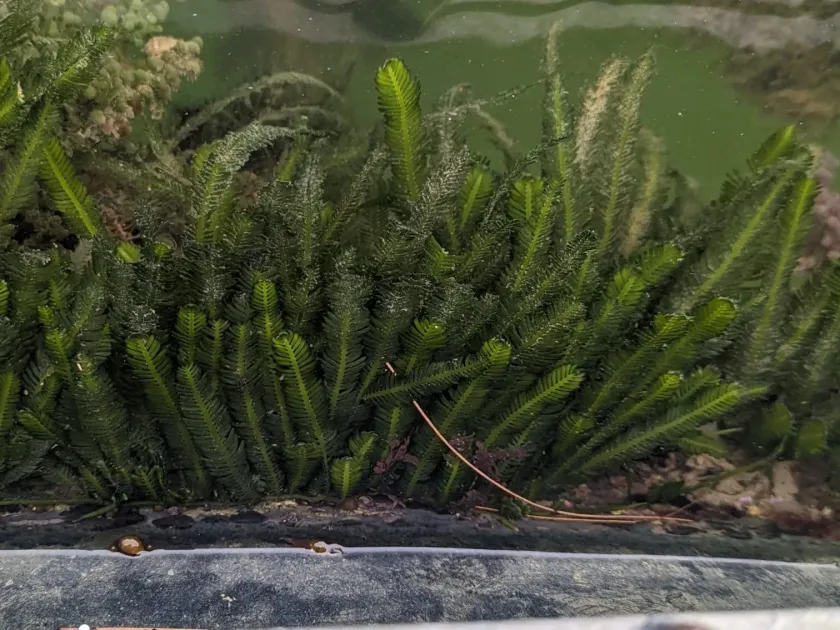
Caulerpa taxifolia is a species of green marine alga belonging to the Caulerpaceae family, known for its distinct fern-like appearance and complex single-cell structure.
Originally native to tropical regions of the Indian and Pacific Oceans, this species has been successfully adapted for cultivation in controlled mariculture environments.
The optimal thermal range for growth is between 22 and 28 degrees Celsius, requiring sophisticated climate control systems to maintain stability throughout the production cycle.
Light intensity plays a critical role, as the plant relies on consistent photosynthetic activity to maintain its rapid biomass accumulation and structural integrity.
Water quality parameters, including stable salinity and consistent nutrient levels (specifically nitrogen and phosphorus), are essential to avoid stress-induced biological degradation.
Yield
The primary economic use of Caulerpa taxifolia is in the food industry, where it is harvested as a high-value culinary delicacy often referred to as sea grapes.
Industrial yield is maximized in vertical farming setups within aquaculture facilities, where controlled nutrient distribution and optimized water flow enhance biomass productivity.
Beyond food consumption, the species is utilized in the biomedical industry due to its diverse profile of secondary metabolites, which possess potential therapeutic properties.
In terms of agricultural output, high-density cultivation in closed-loop systems can yield significant quantities of biomass that are harvested multiple times per season.
Processed extracts from the seaweed are also in demand for cosmetics and advanced skincare formulations, contributing to the diversified value chain of this crop.
Main diseases and pests
The most significant challenge regarding this species is its invasive potential; it has the capacity to colonize vast areas and negatively impact local marine ecosystems.
Pathogenic outbreaks in cultivation tanks are often linked to poor water circulation, which leads to the localized accumulation of metabolic waste and triggers necrosis.
Competition from unwanted epibiotic algae and microflora represents a constant threat, as these organisms can obscure light and compete for essential mineral resources.
Preventative measures for biosecurity involve strict containment protocols and the utilization of closed-circuit systems to ensure that no biological material escapes into the wild.
Regular monitoring of water chemistry is mandatory to detect potential signs of physiological stress, which often precede widespread infection or crop failure.
Harvesting
Harvesting is performed via selective manual or mechanical pruning, a method that encourages the plant to regenerate rapidly from the remaining stolons.
Post-harvest processing involves rigorous cleaning cycles to ensure that the final product is free from sand, sediment, and any unwanted organisms found in the culture medium.
Grading criteria emphasize the density and color of the fronds, as quality control ensures that only the most aesthetically and nutritionally viable biomass reaches the market.
Transport and logistics require climate-controlled packaging that prevents dehydration, as the seaweed is highly sensitive to humidity levels and ambient temperature shifts.
Effective cold chain management is required to extend the shelf life of the harvested seaweed, ensuring that it remains fresh and marketable for the final end-user.