
Sea grapes
Caulerpa racemosa
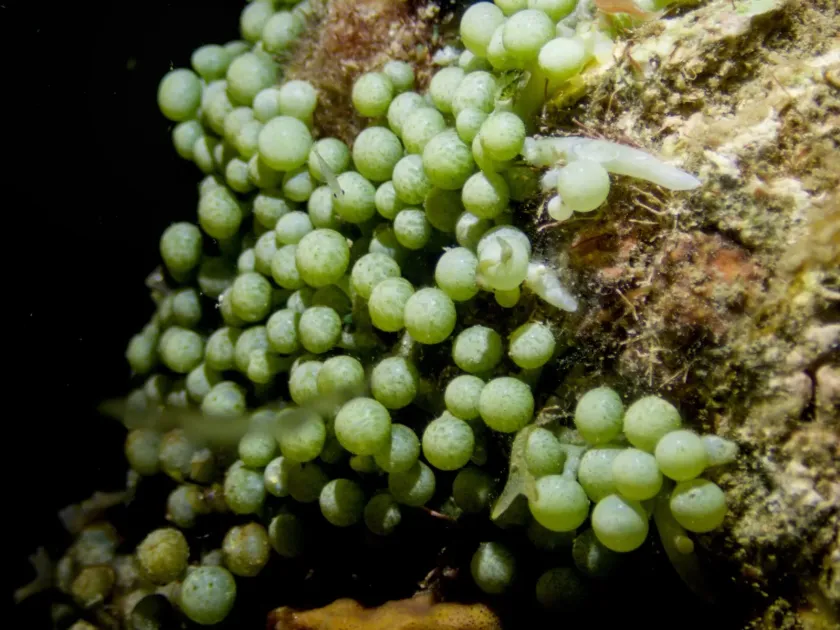
Description
Sowing dates
Caulerpa racemosa, commonly known as sea grapes or green caviar, belongs to the family Caulerpaceae. It is a highly valued marine macroalgae cultivated primarily through vegetative propagation. Farmers select healthy, vibrant green stolons to serve as starting material for new colonies.
Planting involves securing these fragments to a designated substrate, such as mesh grids or rocky beds. This anchoring step is crucial to prevent the fragments from drifting away and to ensure they can begin absorbing nutrients effectively from their surroundings.
In tropical farming setups, the growth cycle is continuous. Once the fragments are securely attached, they expand rapidly, spreading stolons across the surface to form a dense carpet of grape-like clusters within a matter of weeks.
Optimal planting density is essential to prevent overcrowding, which can inhibit light penetration and impede water circulation. Maintaining appropriate spacing allows for the healthy development of each cluster, ensuring higher quality produce at the time of harvest.
The selection of parent stock is a vital agricultural practice. Only disease-free and vigorous individuals are chosen, as the genetic quality of the starter material directly impacts the overall yield and resilience of the entire farm.
Growing requirements
Sea grapes thrive in tropical conditions, requiring water temperatures between 25 and 30 degrees Celsius. Consistent, high-intensity lighting is non-negotiable, as this species depends heavily on photosynthesis to maintain its unique structure and nutrient profile.
Salinity levels should be maintained strictly within the range of 30 to 35 parts per thousand. Deviations from this standard can lead to osmotic stress, causing the plant to lose its firm texture and turn yellow, effectively ruining the market value.
The water quality must be high, with adequate levels of nitrogen and phosphorus. Modern marine farms often utilize automated recirculating systems that monitor and adjust these mineral levels to optimize growth rates continuously.
The seabed or container bottom should ideally be sandy or composed of a neutral material that does not leach contaminants. Proper substrate choice is fundamental for the plant to anchor its root-like rhizoids securely while extracting minerals.
Water movement is another critical factor. A gentle, constant current ensures the uniform distribution of nutrients and oxygen, preventing the build-up of waste products that could otherwise harbor harmful bacteria on the surface of the algae.
Yield
The yield potential of Caulerpa racemosa is among the highest in seaweed farming due to its rapid metabolic rate. In intensive culture environments, the time from planting to harvest can be as short as four to six weeks.
Well-managed farms can produce several kilograms of fresh biomass per square meter per production cycle. By utilizing vertical farming technologies, producers can significantly increase their total output while minimizing the spatial footprint of the facility.
Productivity is significantly enhanced by regular maintenance, specifically partial harvesting or pruning. This practice stimulates the plant to sprout new lateral branches, resulting in a more abundant yield during subsequent harvest cycles throughout the year.
Quality control focuses on the aesthetic appeal of the grape-like vesicles, which must be intact and plump. Premium product is characterized by a bright, translucent green color and a characteristic popping texture when consumed.
Efficiency in biomass production is the key to profitability. Farms often focus on optimizing the nutrient-to-biomass conversion ratio to reduce costs and maintain a competitive edge in the luxury food market.
Main diseases and pests
Pathogenic bacteria and epiphytic algae are the most common threats to Caulerpa racemosa. These organisms compete for space and nutrients, often coating the plant and causing its delicate clusters to rot if not managed through rigorous sanitation.
Pests such as specialized sea slugs and certain crustaceans can graze on the clusters, damaging the crop's market appearance. Farmers employ biological control methods or protective netting to mitigate these risks effectively.
Environmental fluctuations, such as sudden temperature spikes or hypoxia, can lead to mass decay. Such events require immediate intervention, often involving emergency water circulation and temperature regulation systems to stabilize the environment.
Poor water management can also lead to the accumulation of organic waste, promoting mold or fungal infections. Regular monitoring and cleaning of the cultivation tanks are essential preventative measures against these diseases.
The invasive nature of this species is a significant concern. Strict containment protocols are required to prevent the escape of fragments into local ecosystems, where they could potentially disrupt native seaweed populations.
Harvesting
Harvesting is typically done by hand to ensure that the delicate grape-like structures remain intact and that the stolons are not damaged, which allows for regeneration. Skilled labor is often required to maintain the quality of the harvested product.
Post-harvest, the product undergoes a thorough cleaning process in filtered seawater. This removes any debris, sediment, or small hitchhiking organisms, ensuring that the final consumer product meets food safety and quality standards.
Packaging involves using specialized containers that maintain high humidity levels, as sea grapes are highly prone to dehydration. Temperature-controlled storage during transportation is vital to keep the produce fresh for the consumer.
The primary use is culinary, served fresh in salads or as a delicate side dish prized for its unique texture. It is increasingly popular in gourmet cuisine, often referred to as "green caviar" for its luxurious appeal.
For surplus production, drying and grinding the seaweed into a nutritional powder is a viable commercial strategy. This captures the algae's minerals and polysaccharides, extending its shelf life and enabling its use in health supplements.