
Catunaregam obovata
Catunaregam obovata
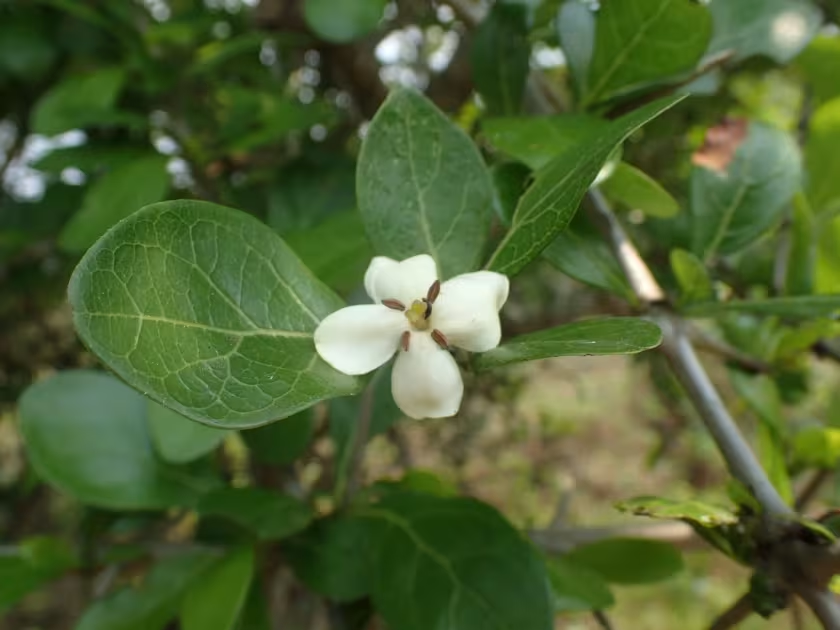
Description
Growing requirements
Catunaregam obovata is a woody shrub or small tree belonging to the Rubiaceae family. It is distinct due to its stiff, sharp thorns and broad obovate leaves that provide high ornamental and ecological value.
The species originates from tropical Africa, where it thrives in diverse environments ranging from coastal thickets to open woodland areas. It is well-suited to hot climates with distinctive wet and dry seasons.
Successful cultivation requires soil that is rich in organic matter and has excellent drainage properties. While the plant can tolerate short periods of water stress, consistent moisture promotes healthier growth.
The plant performs best in full sun, although it can adapt to partial shade during its initial growth stages. Ensuring protection from frost is critical, as the species has no natural tolerance to freezing temperatures.
Beyond its ecological importance, the plant is historically valued for its hard wood, used in traditional carpentry, and for its therapeutic properties utilized in regional ethnobotany.
Main diseases and pests
Common pests affecting this species include scale insects and aphids, which often cluster on young shoots and buds, potentially hindering normal plant development.
Root rot remains a primary concern in agricultural settings where drainage is suboptimal. Stagnant water around the root zone significantly increases the risk of soil-borne pathogens.
Fungal leaf spot diseases can occur during prolonged periods of high humidity and rainfall, especially if the planting density is too high to allow airflow.
The presence of thorns acts as a natural physical deterrent against some herbivores, though browsing by large mammals can still occur in open field conditions.
Regular maintenance, including selective pruning and ensuring appropriate spacing between plants, is essential to mitigate the spread of pests and diseases.