
Lippia
Phyla canescens (Kunth) Greene
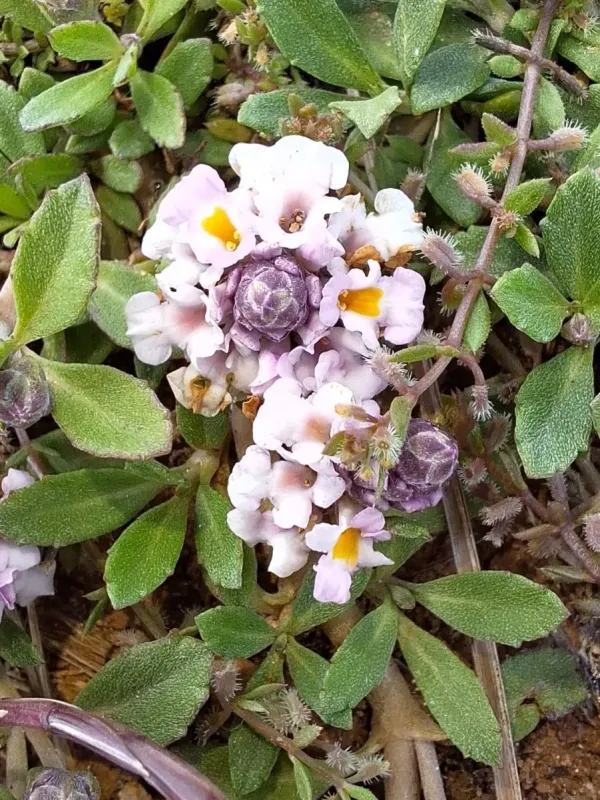
Description
Sowing dates
Lippia canescens is primarily propagated through vegetative cuttings and rooted stolons. The ideal time for planting is during the early spring season, allowing the root system to establish before the peak summer heat arrives.
When establishing a landscape cover, place cuttings or plugs about 20 to 30 centimeters apart. This spacing density ensures that the ground is fully covered within a single growing season, provided that moisture levels are consistently maintained.
Propagating Lippia in cell trays prior to landscape installation can significantly improve survival rates. Young plants should be hardened off before they are moved to the permanent outdoor location to ensure resilience.
During the initial weeks following planting, frequent irrigation is essential to prevent desiccation. Once the stolons have rooted deeply into the soil, the plant becomes remarkably self-sufficient and requires less supplemental water.
The spreading habit of Lippia makes it an efficient colonizer of bare ground. Early maintenance should focus on preventing aggressive weeds from overtaking the newly planted plugs until the dense mat of foliage closes up.
Growing requirements
Belonging to the Verbenaceae family, Lippia is highly valued for its adaptability. It thrives in full sun, where it produces the most compact growth and the highest density of small, nectar-rich flowers.
The plant is versatile regarding soil types, performing well in compacted, saline, or poor-quality soils. However, a well-draining soil profile with moderate nutrient content will yield the most visually appealing and lush groundcover.
Lippia is renowned for its exceptional drought tolerance. Its deep root system allows it to persist under harsh conditions where traditional turf grasses would fail, making it a popular choice for water-wise landscaping.
Regarding temperature requirements, Lippia prefers warm weather between 20 and 30 degrees Celsius. It can tolerate light frosts, though prolonged cold spells may lead to temporary dormancy or dieback of the above-ground biomass.
The plant demonstrates significant tolerance to foot traffic, making it suitable for functional areas. Regular maintenance usually involves light pruning to keep the height uniform and to encourage lateral spread across the designated area.
Harvesting
Harvesting for Lippia is typically focused on the collection of stolons for propagation purposes. Healthy, vigorous runners can be lifted from the soil and divided to establish new planting sites throughout the landscape.
As a nectar source for pollinators, Lippia reaches its peak attractiveness during the flowering stage. If the plant is used for erosion control, harvesting is not recommended, as the intact mat serves to stabilize the soil surface.
Pruning may be performed to manage the spread of the plant, as its aggressive nature allows it to invade adjacent garden beds if not properly contained. Clipped foliage can be recycled as organic compost material.
For sustainable maintenance, removing dead or dry debris from the mat is encouraged. This improves airflow through the foliage, reducing the risk of fungal issues in areas with high humidity or poor drainage.
In regions where the plant is utilized as a formal lawn replacement, occasional mowing can be used to maintain a low profile. This helps to promote a tighter, more uniform carpet of green vegetation over large spaces.