
Campnosperma auriculatum
Campnosperma auriculatum
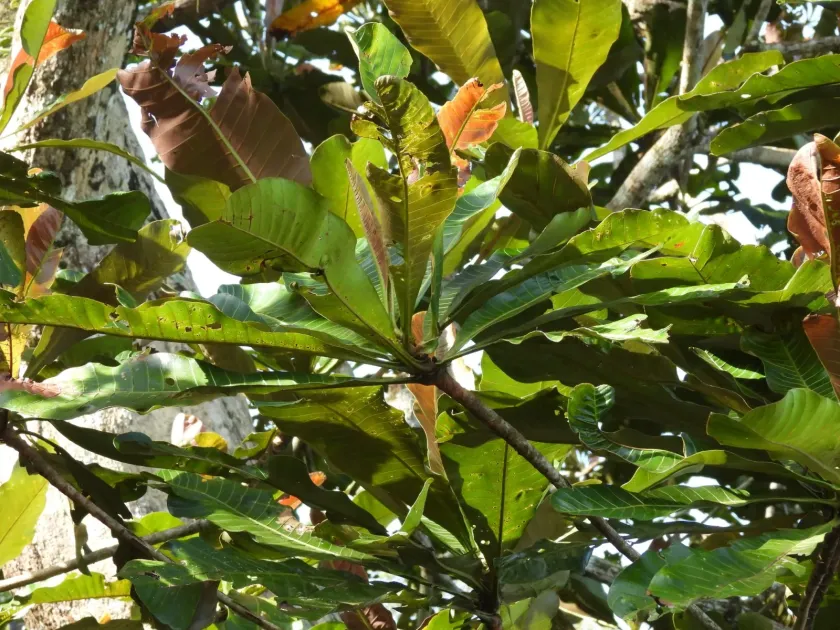
Description
Growing requirements
Campnosperma auriculatum is a notable tree species within the Anacardiaceae family. Renowned for its rapid growth in tropical climates, it often serves as a canopy tree in lowland and swampy forest ecosystems across Southeast Asia.
Native to countries like Malaysia, Indonesia, and the Philippines, this species is highly adapted to humid, low-lying environments. It typically thrives in tropical peat swamp forests where soil moisture remains consistently high.
Climate requirements include constant, high year-round temperatures and substantial annual rainfall. The tree is strictly tropical and cannot survive in environments with frost or significant seasonal aridity, making its distribution strictly equatorial.
In terms of soil, it prefers organic-rich, acidic, and waterlogged substrates. The tree possesses specific physiological adaptations that allow its root system to remain healthy in poorly drained, anaerobic soil conditions.
The wood produced by this species is highly valued for its lightweight, soft, and easy-to-work properties. It is extensively used in local industries for plywood manufacturing, interior construction, and the production of small wooden items.
Main diseases and pests
The primary threat to the species is large-scale land conversion, particularly the draining of peat swamp forests for palm oil plantations and other agricultural purposes.
Pathogenic fungi are a concern, particularly in areas where the natural water cycle has been disrupted, leading to increased susceptibility to root and stem rot diseases.
Various borers and termites represent the most common pests, as they thrive in the soft wood of the tree and can severely degrade the quality of the timber if left unchecked.
Climate change, specifically the increasing frequency of droughts in historically wet areas, poses a major risk to the long-term survival of native populations.
Lack of systematic management in secondary forests often leaves these trees vulnerable to secondary infections and opportunistic pests that thrive in disturbed habitats.